Established 2006 – 100+ NEW posts every year: Movie Locations, B-Grade Sights, Cycling Trips, Travel, Films, Railways, Foxes, Star Wars, J-League, Dining Out, Sport, LCFC…….
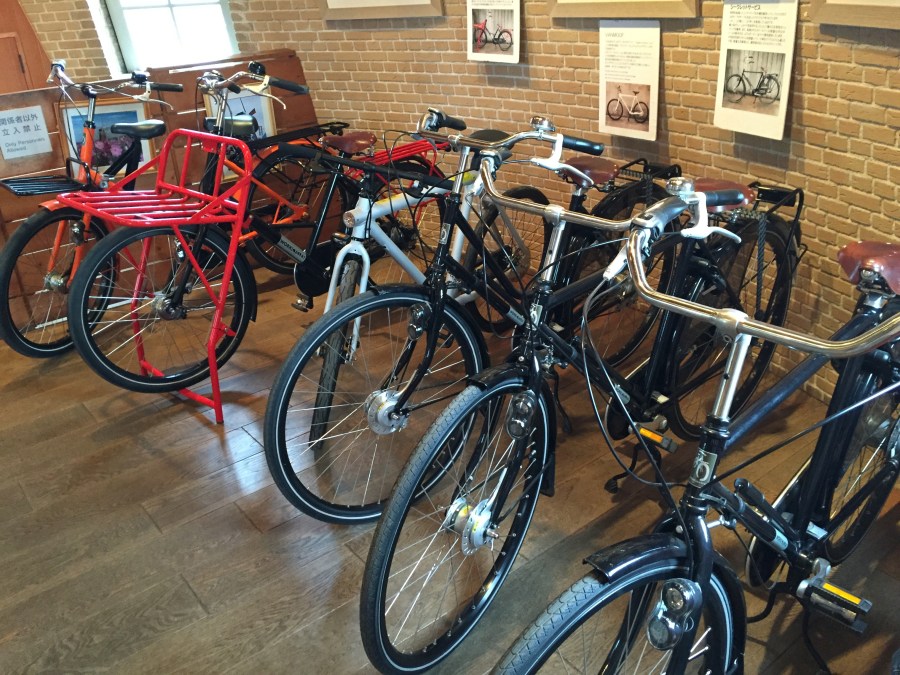
The silver modern bike there is one we don’t have here. The other ones however used to be very common. The 2 on the left side for example would often have a wooden potato crate or later plastic crates fitted to the front to you could take more with you without losing something.
Not sure how this is with Japanese bikes, but in the Netherlands you can easily see whether the bike belongs to a man or a woman. The 2 bikes to the right have a high bar between the steer and saddle, this would be male. You have to swing your leg over it to get on.
However the one next to it doesn’t have that bar up high, but has one low, this is a female bike so she didn’t have to expose herself in order to get on.
Hi Jarno
Thanks so much for all your info. I had no idea about most of it. Yeah the bikes are the same here regarding the bar. I am actually quite surprised that many of the things at this place were fairly accurate. I just assumed it was the misty-eyed Japanese view of what they thought Dutch life was like. Take care.
For a rough interpretation you need to visit Huis ten Bosch (ハウステンボス, Hausu Ten Bosu) which is a themepark in Sasebo near Nagasaki. A lot of the measurements are off there and the obvious themepark part of it that’s rather different from reality. But so far I seen it’s a nice general idea regardless. The name came from Royal Palace Huis ten Bosch (Den Haag, Netherlands).
Looking at Google Maps, I’m quite impressed that they placed it in pretty much the right spot for such a mill. It’s a ‘Poldermolen’, which is a Dutch word that would state this mill will drain the water on one side and pushes it to the other side of a dyke (dijk in Dutch). So it’s placed perfectly. That bridge is for that matter also Dutch although the combination of the two would be strange to see in the Netherlands. Also the rounded canal around it is just done for this location, it serves no purpose other then to keep people away so no one gets injured.
Now if you look from the top view you will notice a nicely angled feature for the Kashima river, That would probably hint towards the fortress towns and star fort shaped structures. If you look up “Bourtange” you can easily see what I mean as one of the most famous fortress cities in the Netherlands.
You probably noticed the green building near the bridge, this is also part of the Dutch idea for this mill. Although this building is clearly made with Japan in mind, you would indeed see similar buildings in the Netherlands but in a completely different context. This would probably hint to the city called Volendam where you would find such colors more. Visit that place on GoogleMaps and drop yourself into the harbor (enclosed harbor part, top right part you should see a fairly big boat) You will find a building sitting next to a boat with ‘anno 1933’ on it. Now you can see where the colors and style came from.
In the side of the river you see a weird bridge like structure, I’m fairly convinced this is also part of the ‘making land’ part, it looks somewhat similar to what you would see in the Netherlands, of course not adding the bridge itself. In basic terms, close off a part that you wish to turn into land. Which they did here. Then drain it and fill it up with something if it isn’t too big of a land mass.
The land is fairly flat here too, so yeah it looks pretty accurate to me, of course you got plenty of Japanese influences for obvious reasons but that can’t be helped. Even to some minor degree that parking space next to the river is looking rather similar to what you would see in the Netherlands. It’s clearly adapted for Japanese usage, but the general idea is the same.
I didn’t know about this mill to be honest, so thank you for sharing. Much appreciate to see this!

 Tokyo Fox (東京狐)
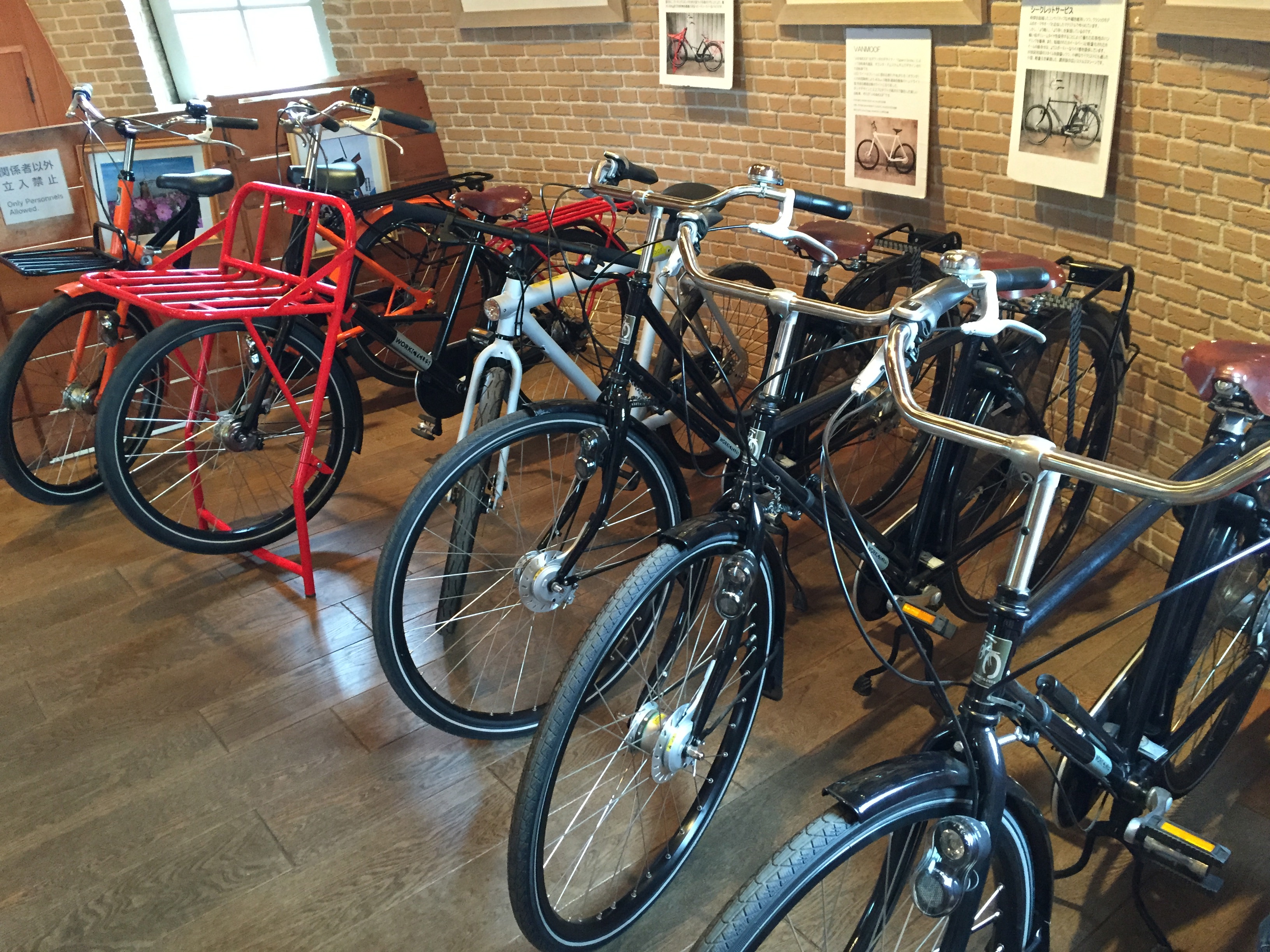
The silver modern bike there is one we don’t have here.
The other ones however used to be very common.
The 2 on the left side for example would often have a wooden potato crate or later plastic crates fitted to the front to you could take more with you without losing something.
Not sure how this is with Japanese bikes, but in the Netherlands you can easily see whether the bike belongs to a man or a woman. The 2 bikes to the right have a high bar between the steer and saddle, this would be male. You have to swing your leg over it to get on.
However the one next to it doesn’t have that bar up high, but has one low, this is a female bike so she didn’t have to expose herself in order to get on.
Hi Jarno
Thanks so much for all your info. I had no idea about most of it. Yeah the bikes are the same here regarding the bar. I am actually quite surprised that many of the things at this place were fairly accurate. I just assumed it was the misty-eyed Japanese view of what they thought Dutch life was like. Take care.
For a rough interpretation you need to visit Huis ten Bosch (ハウステンボス, Hausu Ten Bosu) which is a themepark in Sasebo near Nagasaki. A lot of the measurements are off there and the obvious themepark part of it that’s rather different from reality. But so far I seen it’s a nice general idea regardless. The name came from Royal Palace Huis ten Bosch (Den Haag, Netherlands).
Looking at Google Maps, I’m quite impressed that they placed it in pretty much the right spot for such a mill. It’s a ‘Poldermolen’, which is a Dutch word that would state this mill will drain the water on one side and pushes it to the other side of a dyke (dijk in Dutch). So it’s placed perfectly. That bridge is for that matter also Dutch although the combination of the two would be strange to see in the Netherlands. Also the rounded canal around it is just done for this location, it serves no purpose other then to keep people away so no one gets injured.
Now if you look from the top view you will notice a nicely angled feature for the Kashima river, That would probably hint towards the fortress towns and star fort shaped structures. If you look up “Bourtange” you can easily see what I mean as one of the most famous fortress cities in the Netherlands.
You probably noticed the green building near the bridge, this is also part of the Dutch idea for this mill. Although this building is clearly made with Japan in mind, you would indeed see similar buildings in the Netherlands but in a completely different context. This would probably hint to the city called Volendam where you would find such colors more. Visit that place on GoogleMaps and drop yourself into the harbor (enclosed harbor part, top right part you should see a fairly big boat) You will find a building sitting next to a boat with ‘anno 1933’ on it. Now you can see where the colors and style came from.
In the side of the river you see a weird bridge like structure, I’m fairly convinced this is also part of the ‘making land’ part, it looks somewhat similar to what you would see in the Netherlands, of course not adding the bridge itself. In basic terms, close off a part that you wish to turn into land. Which they did here. Then drain it and fill it up with something if it isn’t too big of a land mass.
The land is fairly flat here too, so yeah it looks pretty accurate to me, of course you got plenty of Japanese influences for obvious reasons but that can’t be helped. Even to some minor degree that parking space next to the river is looking rather similar to what you would see in the Netherlands. It’s clearly adapted for Japanese usage, but the general idea is the same.
I didn’t know about this mill to be honest, so thank you for sharing.
Much appreciate to see this!
Thanks for so much info Jarno. I’ve still never been to Huis Ten Bosch but I know a few people who have been there and really like it. One day maybe!