
Ask any rugby fan when England last won a world trophy and they are more than likely to say the 2003 Rugby World Cup when they defeated Australia in their own backyard in dramatic late fashion thanks to a Johnny Wilkinson drop goal. However, that is not quite true as at the start of this month England not only won one but two world tournaments that were both taking place in Tokyo.
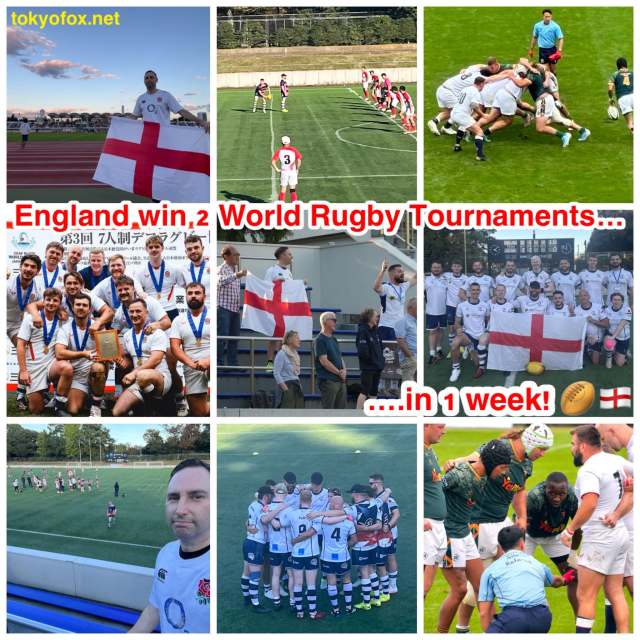
The first one was the Deaf Rugby World Sevens Japan 2026 tournament that took place over four days (including a rest day) on the extended weekend at the end of October and start of November when there was a public holiday on the Tuesday.
11 nations were taking part in three days of competition in both men’s and women’s (six teams only) rugby sevens at a trio of different stadiums in Tokyo. Miraculously, my last three lessons cancelled on Halloween, so I decided to head the relatively short distance to Yumenoshima Athletic Stadium in Shin Kiba for some Pool Stage Day One action.
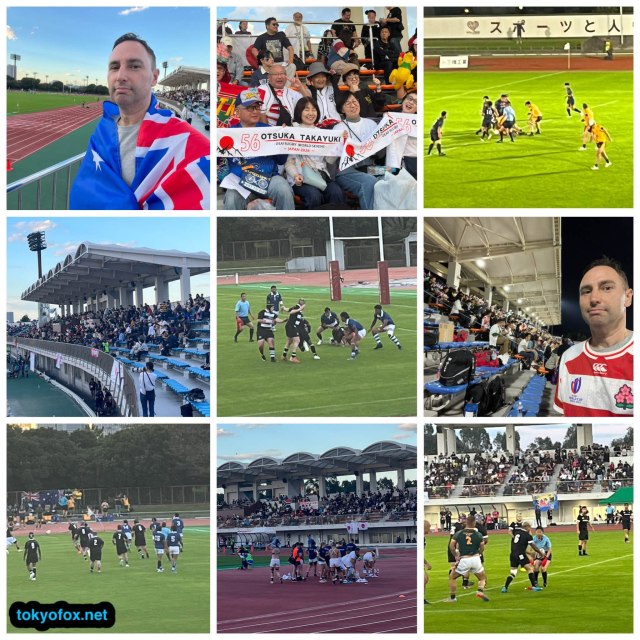
The turnout to see the likes of Australia, Barbarians, England, Fiji, Hong Kong China, Italy, Japan, New Zealand, Samoa, South Africa and Wales in action was pretty impressive and far more than I anticipated to be honest. I saw half a dozen matches whilst I was there.
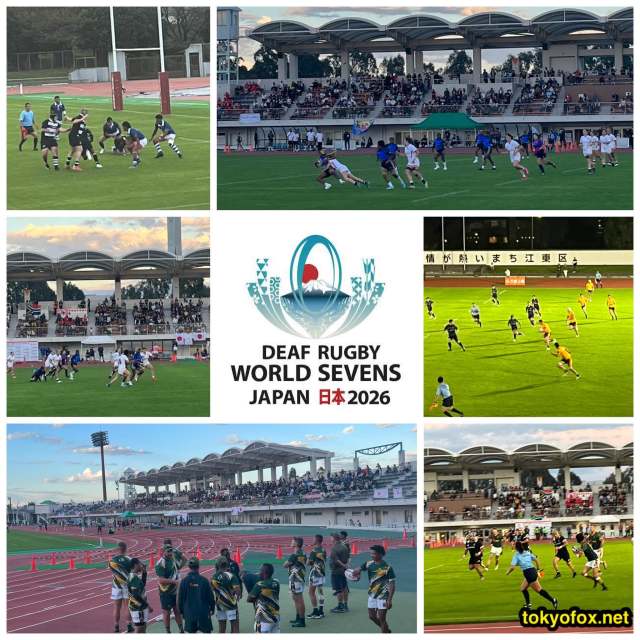
The laws of deaf rugby are almost identical to Rugby Union, but all the players have some kind of hearing loss (at least 40 decibels) which does mean that they often play on after the whistle. The referee and assistants wave brightly coloured flags and use hand signals to gesture any offences.
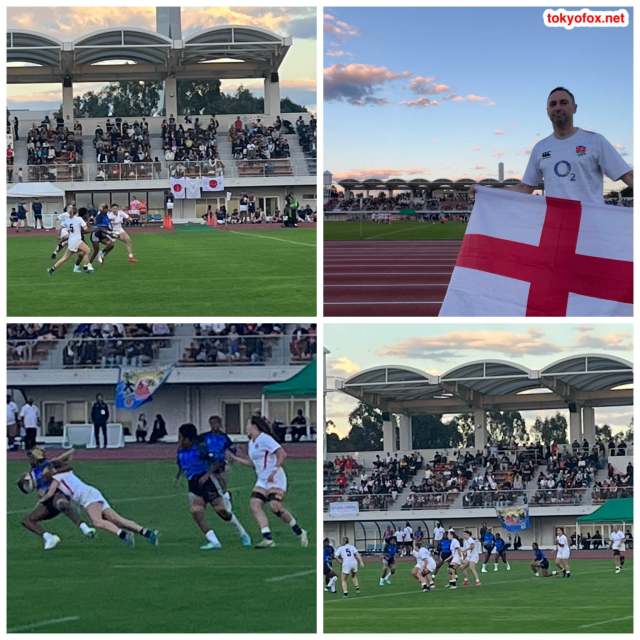
There was a day off on Sunday before play resumed on November 2nd at Spears Edoriku Field in Edogawa followed by the final stages at Chichibunomiya Rugby Stadium on Culture Day (3rd November). I had intended to attend the early stages of that final day but life gets in the way sometimes and not everything goes to plan. I would never have been around for the actual finals anyway which saw England and Australia face off against each other in both the women’s and men’s competition. Australia won 31-14 in the former but the latter saw England romp it 45-5.
Less than a week later I attended the first day of the Blind Rugby International Tournament 2026 at Komazawa Olympic Park. Japan, England and Ireland were playing a round robin tri-nations series of matches, and I was even more intrigued by how this sport worked.
Eight years ago, I attended the Blind World Grand Prix football competition in Tokyo and enjoyed that spectacle although it ended with England inevitably losing the final to old rivals and adversaries Argentina. Back in the present, it was a very sunny early November afternoon when I made my way to Komazawa Olympic Stadium for the first international blind rugby tournament for visually impaired players.

Nope, it wasn’t taking place at this stadium!
On arrival I could hear a lot of noise and atmosphere coming from there which surprised me as there was supposedly 30 minutes till the rugby was scheduled to start. As it was, an athletics meeting was taking place there so I frantically checked the website thinking that maybe I’d gone to the completely wrong place. All was not lost though as it was actually taking place in Komazawa Park but at Ball Game Field No. 2 which was a short distance away.

The England team line up pre-match
Blind rugby was invented in England in 2015 and introduced to Japan three years later. The Japan Blind Rugby Association was established the year after which was when all global eyes were on this country as it became the first Asian country to host the Rugby World Cup. What a time that was!

Whilst watching the pre-match team announcements and introductions a guy came up to me (having seen my England flag) and asked if I wanted to come over and join him and a few other England ultras comprising players’ family members and one or two others including a Japanese guy who I talked to a fair bit.

For him, England’s 10-0 defeat of Japan here was a warm-up for his trip to London this weekend (November 14th) to see the World Rugby Nations Championship at Twickenham.

Whilst deaf rugby is principally the same as Rugby Union, the blind version is different in a few ways. The fluorescent yellow ball contains ball bearings so players can track its movement by sound. No kicking is allowed in open play for safety and there were certainly no conversions after tries had been scored. The tackling is probably the most noticeable difference and is basically done by tagging an opponent who then puts the ball down for the person behind him similar to Rugby League.

England whooped Ireland 35-5 and then Japan defeated the Irish 25-5. On day two France joined the party but in the end the final was contested between Japan and England with the latter winning it 15-0 to take the trophy. Congratulations to them, the deaf team and all the people working behind the scenes to put on these competitions in Tokyo.
Click here to read ‘A Different Type of Football but it’s the Same Old Story for England!’
Click here to read ‘The Easiest Way for Tokyo Residents to Truly Experience the Aichi-Nagoya 2026 Asian Games!’
Click here to read ‘Japan & Great Britain Face Off in a Hotly Contested Sporting Spectacle in Tokyo’
Click here to read ‘5 Different Sports On 5 Separate Visits to a Multi-Purpose Venue in Tokyo’s Sporting Mecca’


