Back in August last year I was all set to meet up with a fellow Leicester City fan to watch RB Omiya Ardija but a couple of days before the match I got a message saying he’d taken an impromptu trip back to England. Viewing all his Insta stories from Leicester was actually what gave me the idea of returning home last Christmas having never given it a moment’s thought before that. His updates really did take me on a journey back in time and I wanted to replicate such nostalgia when I was back in the UK.
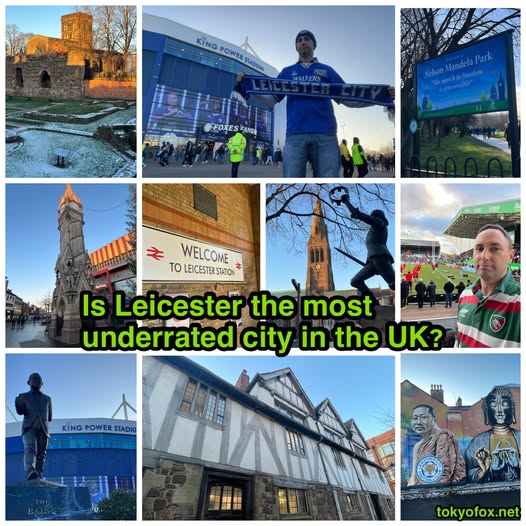
The short trip into Leicester (15 minutes by train) usually only happens once or twice for me whilst back home but I went there five times on this occasion, all in the name of live sport. A few of them were combined with looking around the city though which I have a great love and affection for. Eagle eyed readers may recall that I have done something very similar to this before but that was a decade ago so it’s maybe time to recycle the idea. The port of entry into Britain’s tenth largest city for me is usually Leicester Railway Station of which its frontage is a lovely and well-preserved late Victorian building.
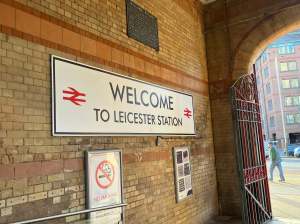
Travel agency founder Thomas Cook has had a statue just outside the station since 1991. He is one of the city’s best-known adopted sons and his company will have organised many national and international tours in the 20th century heyday, but they are highly unlikely to have included Leicester as it’s not exactly on the tourist circuit for visitors coming to Britain.
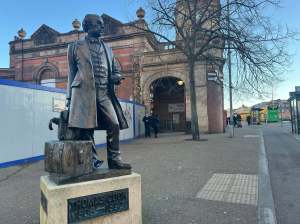
From the station I headed down Granby Street and began my trip down memory lane. Well, kind of. Naturally the city has changed a fair bit in the years I’ve been away and it did seem like just a constant stream of takeaways until I got a bit more central where the first building of note with the black and white timber design was just a bar!
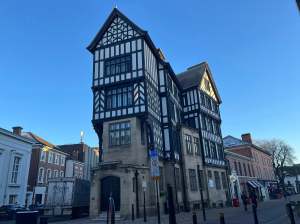
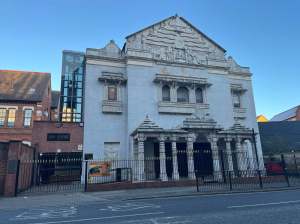
The Jain Centre is a significant place of worship known for its impressive architecture combining traditional Indian design and intricate carvings with modern elements.
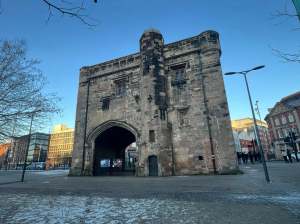
Just up the road from there is Newarke Gateway, a listed building steeped in royal and military history that dates back to the 15th century. It is one of Leicester’s finest medieval buildings.
Leicester is a very multi-cultural city and that was represented in some of the fine graffiti I saw that blended the diversity with sporting references of sort.

There is an LCFC mural painted by Leigh Drummond on The Newarke which was commissioned by Leicester City Council to commemorate the club’s miraculous Premier League title win in 2016.
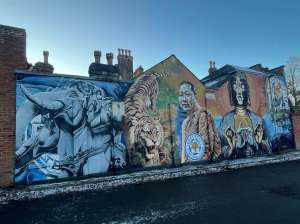
The Thai theme is a reference to the late Leicester City F.C. Chairman Vichai Srivaddhanaprabha.

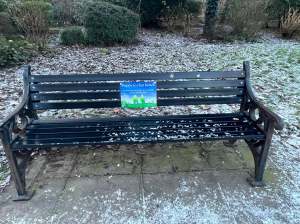
Castle Gardens on the banks of the River Soar was next and a pleasant place to stroll through. This was early January so there was still snow on the ground and the “Happy to chat” bench was empty. I sat there but nobody came to chat with me at all!
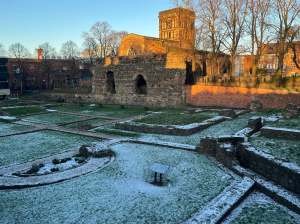
Jewry Wall is believed to be one of the tallest surviving pieces of Roman masonry in the country standing at nine metres high.
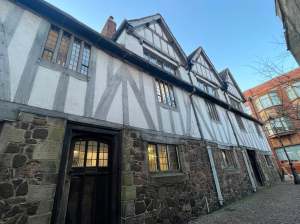
The 14th century timber-frame exterior of the Guildhall dates back to Medieval times and was a building of importance during the time of Richard III who was the King of England between 1483 and 1485.
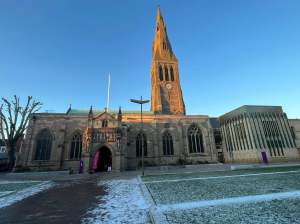
Leicester Cathedral stands right beside the Guildhall and has arguably become more famous in recent times as it is where Richard III was reburied in 2015 at a time when the football team were bottom of the Premier League and relegation certainties. With King Richard finally at rest, everything really did change for Leicester City.
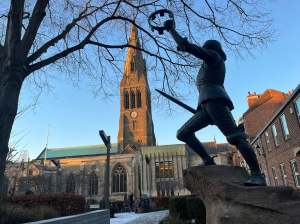
There is a statue of him on St Martins East which is just over the road from the King Richard III Visitor Centre. It was sadly closed on the day I was there.
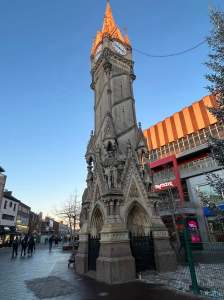
The Clock Tower is the focal point of the city centre standing at the crossroads of pedestrianised areas which split off in all directions.
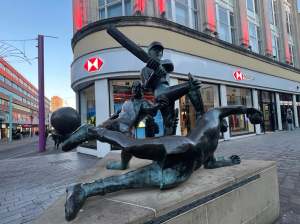
On the corner of Humberstone Gate and Gallowtree Gate is the bronze Sporting Success statue which was built following successful seasons by the football, rugby and cricket teams in the 1996-97 season. There sure have been quite a few more recent glory days (as well as failures!) for the city’s teams since then!
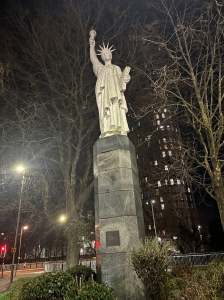
Who knew there was a Statue of Liberty in Leicester? The many football fans passing by it on match days will certainly know of it! It used to stand on the roof of the Liberty Shoes factory but when that was demolished in 2003 it eventually found a new home nearby the King Power Stadium.
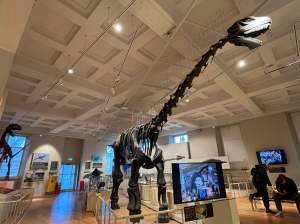
All of the places mentioned in this post thus far were visited in one day but just 24 hours earlier I visited Leicester Museum & Art Gallery en-route to watch Leicester Tigers play.

Formerly known as New Walk Museum, it is Leicester’s original museum and is absolutely free. The galleries include Ancient Egypt and Dinosaurs among others but the highlight for me was the local history through the years.
The majority of tourists only ever pass through my home city as they go between London and the likes of Liverpool and Manchester but if they were to disembark in Leicester then they would find a well-located and diverse city offering a blend of rich history (both ancient and more modern), culture, science, sport, shopping and food. That certainly hasn’t all been covered in this post but hopefully my non-biased (?) opinion has given some readers food for thought!
Click here to read ‘Taking My Wife on Her First Trip to Leicester’
Click here to read ‘3 Home Matches in 11 Days on My Big Return to Leicester Delivers Mixed Results!’
Click here to read ‘My 1st Leicester Tigers Rugby Match For 23 Years!’
Click here to read ‘Sightseeing in Leicester! Yes, really!’


Pingback: London Day-Trip: Graffiti Tunnels, Wax, Movie Locations, Modern Architecture, Quirky Museums, A Unique Platform & The Famous Cock! | Tokyo Fox (東京狐)