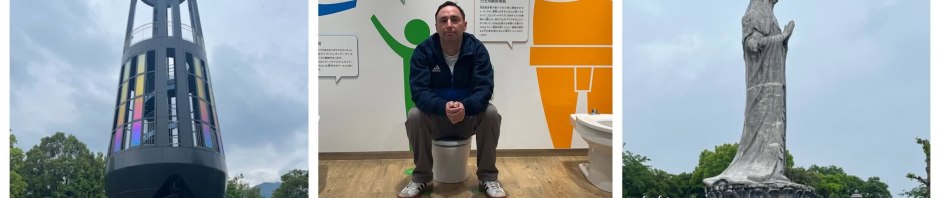
Having flown to Kyushu for a three-day trip in June 2024 I didn’t anticipate returning so soon but with a day to myself (whilst in Hiroshima with family) I decided to treat myself to a day trip to Fukuoka Prefecture. It was built up around a football match at one of my bucket list stadiums and over time more and more things got added to my itinerary meaning that it was a very early start as I left Hiroshima station on the Shinkansen (bullet train) at 6:00 am.
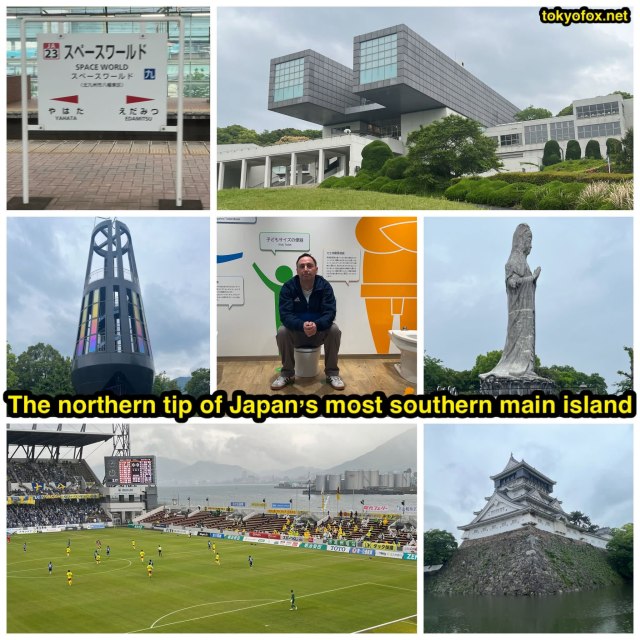
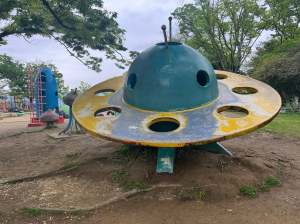
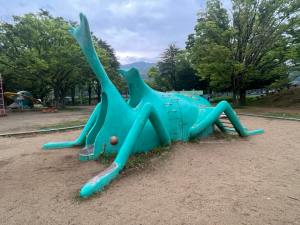
About an hour later I was in Kitakyushu, the northern tip of Japan’s most southern main island. Kokura station was my point of arrival and I immediately took a bus to Wanpaku Momozono Park. More details here.
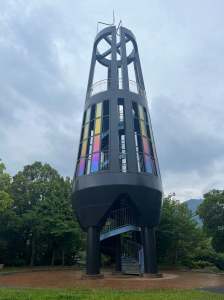
It was another bus soon after that to the next park but this time it was to see the blast furnace tower monument which was erected in August 1995 entirely as a publicity and promotional project funded by the Japan Lottery Association. The acrylic glass panels reflect rainbow colours giving it a somewhat mysterious feel.
From there I walked to Kitakyushu Municipal Museum of Art which took just over half an hour but it wasn’t as straightforward as it may sound due to the incline and narrow streets I had to navigate en-route. The best part of this museum was the exterior but when I realised it was only 300 yen to enter (excluding the special exhibits which cost a lot more) I decided I might as well pop in.
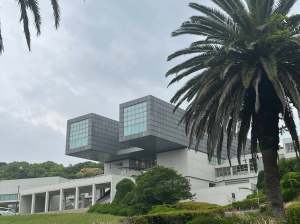
It was barely worth that though and was ultimately a little disappointing with a minimal number of paintings for viewing inside the three-story atrium. It should be said that the interior was also beautiful with a marble floor giving it a cathedral-like atmosphere. It’s just a shame about the limited contents on the entrance ticket but maybe the special exhibit rooms were more captivating. You get what you pay for basically! More details here.
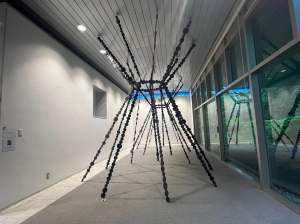
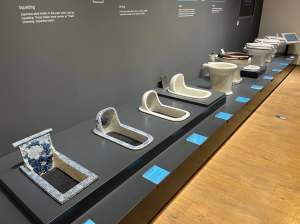
Another bus was then taken to Toto Museum which is one of the most famous sights in Kitakyushu. I initially thought a free museum dedicated to the toilet manufacturer would be small and quirky but it’s a sizeable place that really takes itself seriously with displays taking the visitors through the history of toilets and Toto’s innovative sanitary equipment, including early ceramics and modern washlets. More details here.
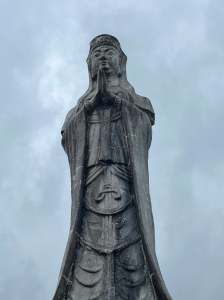
With limited time on the northern tip of Japan’s most southern main island, my original plan did NOT include Washimineyama Heiwa Kannon. However, as I was ahead of schedule I decided to squeeze in a visit to this 17-meter-tall goddess statue which is located on the outskirts of EcoPlay Park Tenbodai.
Sadly, the bus I took arrived later than expected and the clear morning weather turned into rain. After much indecision on my part, I finally ended up climbing the 137-meter-high mountain in search of the statue which was not visible from the roadside and there was also nothing in the way of signage indicating its whereabouts. It was all worth it in the end but a toilet experience on the descend resulted in an experience which still sends shivers down my spine! More details here.
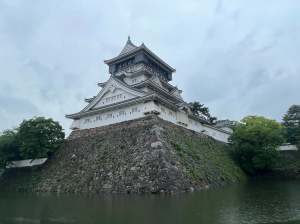
On my fifth and final bus ride of the day, I was heading back towards Kokura station but decided to have a quick photo stop at Kokura-jo Castle as I didn’t know if I’d ever be back in the area. I somehow missed the intended bus stop so then had to run a bit from the next one to catch the briefest glimpses of the castle originally built in the early 17th century.
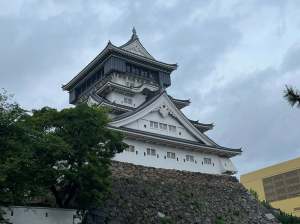
After a couple of fires in the 19th century, the keep was reconstructed in 1959 and fully restored in 1990. The exterior was pretty impressive, and I’d have liked to explore the surrounding area more but I had to get to the football match.
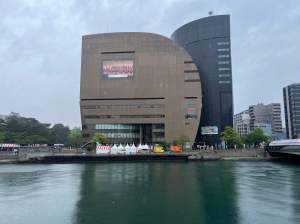
En-route to the stadium I did see this interesting looking building which is an event venue.
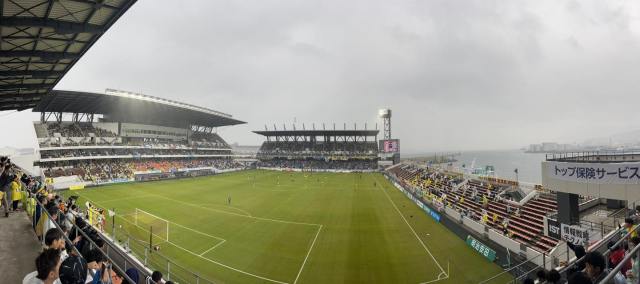
The football match was a regional derby between Giravanz Kitakyushu and Oita Trinita which was taking place at the Mikuni World Stadium Kitakyushu. This is a relatively new one having opened in 2017 but its most appealing feature for me is the location right beside the sea that separates Kyushu and Honshu, the largest island of Japan. I arrived just in time for kick off and really wanted to see what happened if the ball was kicked over the back stand into the surrounding waters but did it happen? More details here.
Click here to read ’12 Hours in Fukuoka: Unique Architecture, Cheap Ramen, A Frog Temple, Platform Zeros & The World’s Largest Bronze Statue!’
Click here to read ‘What the Fukuoka! Adventures in Search of an Elusive Giant Goddess Statue’
Click here to read ‘A Regional Football Derby at a Modern Stadium Located Right by the Sea’
Click here to read ‘The Art Museum That Has Eyes on You Before You Look at It!’


This blog post brings back so many memories of whirlwind travel days! Hopping on an early morning Shinkansen from Hiroshima all the way up to Kitakyushu on Kyushu island just for a football match and some sightseeing sounds like an absolute blast. It honestly reminds me of the kind of jam-packed itineraries people try to cram into a New Zealand tour when they are rushing from the North Island to the South Island in record time.Exploring Kitakyushu
Reading about your journey through Kokura Station, local buses, quirky stops like the Toto Museum, and rushing past Kokura-jo Castle is wild. Navigating narrow uphill streets to find the municipal art museum and squeezing in that 17-meter-tall goddess statue shows just how much you can squeeze out of a single day if you keep moving. It is funny how travel fatigue sometimes hits hardest when you least expect it—kind of like planning a massive New Zealand tour and realizing just how much driving is involved between destinations. Still, managing all those bus connections without getting completely lost is a major win!Conclusion
Thanks for sharing such a detailed breakdown of your Kyushu detour. It proves that even a quick getaway from Hiroshima can turn into a full-blown adventure if you are brave enough to tackle local transit timetables. If your next big vacation happens to be a New Zealand tour, I am sure you will pack just as many epic sights into every single day!