It’s been a decade since I last visited Kyushu; the most southern of Japan’s main four islands. Back in May 2014 my girlfriend (now wife) and I met up with her parents and Momiji the dog (god, rest her soul) to travel around Kumamoto Prefecture. First, we had a few days to ourselves in Nagasaki. When thinking of this city first thoughts often turn to the atomic bomb that was dropped on it in 1945. Urukami is the hypocentre of the explosion and there are a few bomb-blasted relics, monuments and paper cranes in the spacious concrete park.
The Nagasaki Atomic Bomb Museum was basically our first port of call and it was inevitably a chilling reminder at times of how atomic bombing can cause such devastation. Some of the relics, informative materials and photographs depicting the tragedy were fascinating viewing albeit a bit depressing of course.
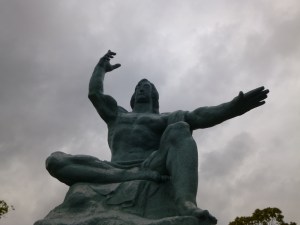
The Peace Park is a short walk from the museum and has the Fountain of Peace (shaped like a dove’s wings) and the Peace Statue with its flat outstretched left hand symbolising eternal peace. The right hand points to the sky to represent nuclear threat.
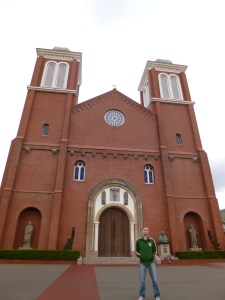
From there we walked on to Urakami Cathedral which is a replica of the original that was of course destroyed by the bomb at 11.02am on that fateful day in 1945.
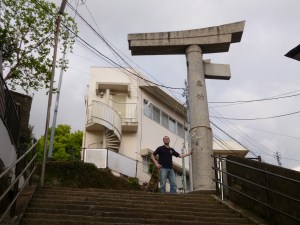
A 15 minute walk down the road is Sanno-jinja Shrine which is more commonly known as one-legged torii gate following the loss of it’s other one during the blast.
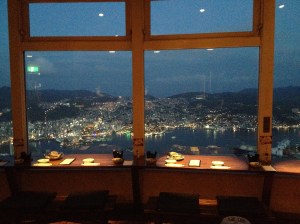
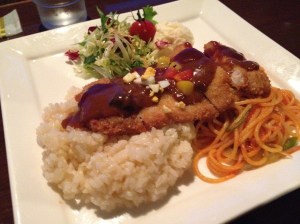
We took the ropeway up to Mt Inasa observation platform for a view which is considered to be one of the three best night views in the world. Not only that but we observed it from a restaurant with amazing views whilst eating a couple of reasonanly priced Nagasaki food dishes; beef steak turkey rice (Nagasaki beef steak, pilaff, spaghetti and salad) and turkey rice (pork cutlet, pilaff , spaghetti and salad).
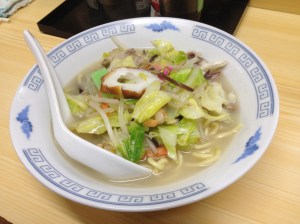
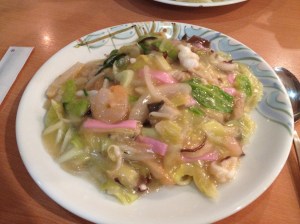
That wasn’t the end of the regional cuisine though as we popped into a very local place to have what is perhaps the most famous Nagasaki dish. Champon is a ramen speciality consisting of octopus, squid, kamaboko (white and pink fish-based patty), pork and vegetables in a white, salt-based broth.
The old Nagasaki Prison was knocked down in 2007 but the front gate remains, and that was a place I went to see on my own the next day.

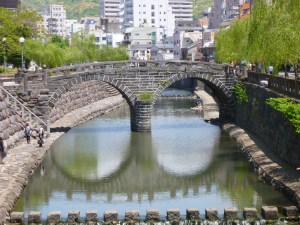
Before that we had gone to Megane-bashi (spectacles bridge) which is named because of the shape made by the arches in the reflected waters.
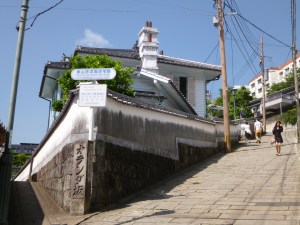
We then took another tram to the Glover Garden area but we didn’t have enough time to look around the western-style houses and gardens.
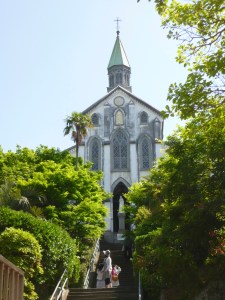
Oura Catholic Cathedral is Japan’s oldest remaining gothic-style wooden church. Nagasaki had principal links to the likes of Portugal and the Netherlands, with the former playing a major part in opening Japan up to Christianity which was then banned with 26 foreign priests and Japanese converts crucified in 1597. This church is dedicated to those 26 Christians. The religion continued to be practised in secret until it was made legal again at the end of the 19th century.
Shinchi Chinatown was followed later that evening by another Nagasaki speciality; sara-udon (literally plate noodles) which in this instance was chanpon noodles (as opposed to the more common thinner crispy noodles) with a topping of fried cabbage, bean sprouts, squid, prawns, pork and so on.
A trip to Gunkanjima a.k.a. Battleship Island was the main thing I wanted to do whilst in Nagasaki. Formerly known as Hashima, this place was brought to the mass attention of the public when it featured in the 007 film ‘Skyfall‘ (2012) but it was sadly all faked on a set back at Pinewood Studios.
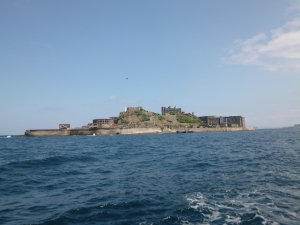
The island is only 480 metres long and 150 metres wide but with 5,300 residents once living there it had the world’s highest population density which meant that in typical Japanese fashion every piece of land was built up with multi-storey buildings and so, with the surrounding sea walls, it came to look like a massive battleship.
Mistubishi company bought the Hashima mine at the end of the 19th century and that was the catalyst for the island’s development. The southern half of the island was for the workings of the mine and the northern half was devoted to residential space, a school, restaurants, shops, a swimming pool, a shrine and a hospital.
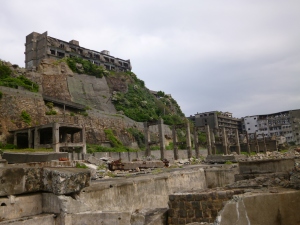
However, in April 1974 the mine was closed and those residents had to leave Gunkanjima, abandoning the island. Following the exodus, severe weather conditions such as typhoons caused the buildings to deteriorate and as these structures started to erode away and collapse, Gunkanjima was closed to the public. We were probably on the island for around an hour which I thought was long enough and offered a thoroughly interesting insight into the island life and a sense of how isolated the islanders must have been. More details here
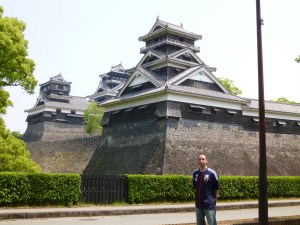
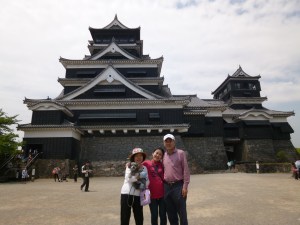
We took a couple of bullet train rides from Nagasaki to Kumamoto the next day to meet up with Rina’s parents beginning with a brief stop to see the vast castle area that dominates the city. With its steep curved stone walls, Kumamoto-jo is considered one of the three premier castles in Japan, along with the ones in Matsumoto and Himeji.
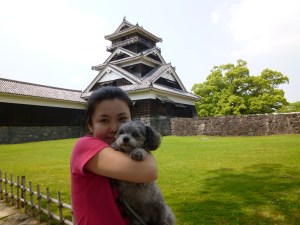
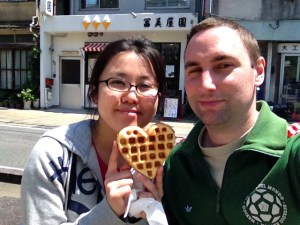
After sampling the local ramen dish, we headed south to Amakusa via a series of beautiful islands (connected by bridges) off the west coast of Kyushu. Rina’s parents had booked us all in to ryokan (traditional Japanese inn) with it’s own private beach-of-sorts which allowed for a late afternoon amble over the rocks that lay between the red bridge and our lodgings for the night.

There was a lavish seafood evening meal and an equally traditional breakfast which was followed by a quick onsen (hot spring) before we went to see Amakusa Shiro Memorial Hall; the site of the christian rebellion in the 17th century whereby the surviving Christians continued to practice their faith in secret despite persecution. Much of this story was further explored in the Martin Scorsese directed film ‘Silence‘ (2016).
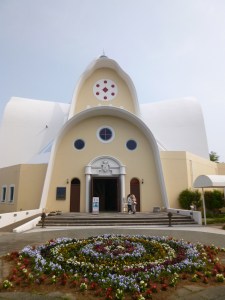
In the beautifully landscaped Aso-san area later that morning we visited a shrine possessing a fountainhead with a spectacular pond yielding an abundance of good, clear, quality water which is perfectly fine to drink.

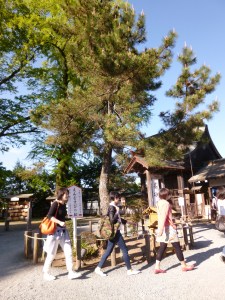
Aso Shrine is the most noted Shinto shrine in Kumamoto prefecture, and one that has been a place of worship going back to the 600s and many visitors come to appeal to the local deity for good fortune in marriage among other things. Our wedding was on the horizon at that point and it is believed that for the fortune to truly be bestowed you have to walk around a particular tree two times.
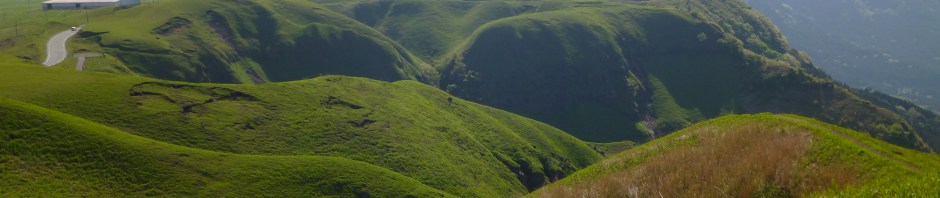
Our final day in Kyushu brought about some great fortune as we were able to see Mount Aso very clearly amid fine conditions whereas the day before had been shrouded in mist. Aso-san is the largest volcano in Japan and the scenery was awesome with some splendid views of the greenery in the area.
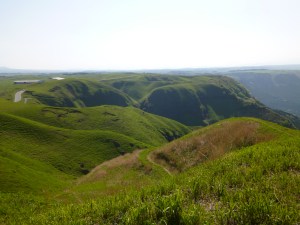
Mount Aso consists of five peaks and the view of the peaks from this place is likened to a buddha lying down.
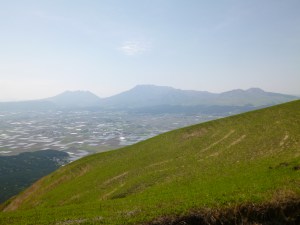
Kusasenri-ga-hama is a vast plain with cows grazing on the grass covering with horse rides on offer nearby too.
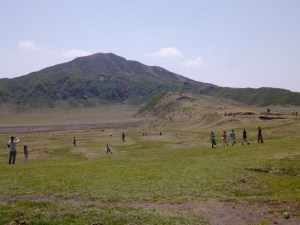
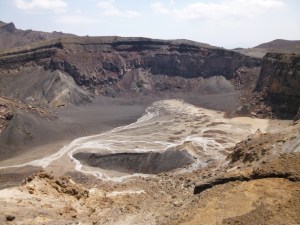
Not far from there was the active Nakadake crater which was shaped over 20,000 years ago.
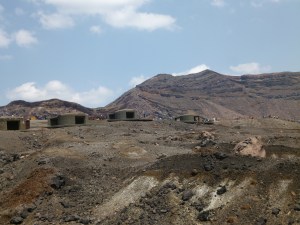
Mount Nakadake is located within the caldera that is 25 kilometres in diameter. Nakadake’s crater itself is 600 metres in diameter, 130 metres deep and has a circumference of 4 kilometres. This Grand Canyon-esque place emits smoke and due to the presence of toxic volcanic gas the crater is sometimes restricted.
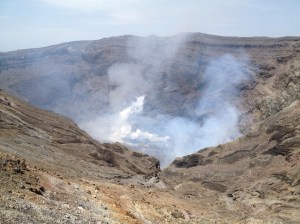
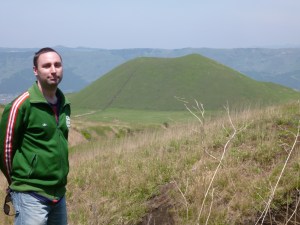
The small, picturesque, green volcanic cone shaped slope of Kome-zuka (954m) was seen a few times throughout the day. The name actually means ‘rice mound’ and it’s another extinct volcano.
Aso Farm Land was our final destination for the whole trip and one that was ultimately very disappointing for all of us, especially Rina’s dad who said that it had changed a lot since he last went many, many years earlier. This was a health theme resort with crowds of people, restaurants galore, souvenir shops aplenty, many photo opportunities, lots of baths, spas and other such amenities. Basically, it had all the makings of your typical Japanese tourist trap but I couldn’t quite get why this place was so popular!
It may not have been the ending this Kyushu trip deserved but luckily almost everything that went before it was really great. The next time we travelled as a family was three months later when we went to the country of my birth.
Click here to read ‘TF Flashback: Christmas In Fukuoka (2005)’
Click here to read ‘Enjoying The Slow Pace of Life On The Island That Aptly Looks Like A Snail’
Click here to read ‘Day Trip To Gunkanjima a.k.a. Battleship Island’
Click here to read ‘We Got Very Lucky To See The Wonderful Mount Aso On A Rare Clear Day’

 Tokyo Fox (東京狐)
Pingback: 12 Hours In Fukuoka: Unique Architecture, Cheap Ramen, A Frog Temple, Platform Zeros & The World’s Largest Bronze Statue! | Tokyo Fox (東京狐)