TF Flashback: Kamikochi & Matsumoto (2005)

My first trip into Nagano was not actually for one of my many snowboarding expeditions in Hakuba but to the remote mountainous highlands of Kamikōchi (translates basically as Upper Highlands) on the western side of the prefecture. The reason for the outing was to see the Autumn leaves in their perfectly formed red and yellow glory back on the 28th and 29th October in 2005.

Kamikōchi is 169 miles from Tokyo and located in the Hida mountains in the northern part of the Japan Alps. To get there meant leaving Shinjuku at 8am via the Azusa Ltd Express (approx. 6000 yen) to Matsumoto which took three hours. My girlfriend-of-the-time (this was nine years ago remember!) then changed to the Dentetsu line (680 yen) which took us on to Shin Shinashima station where a bus then completed the journey and  we finally disembarked at around 2pm!

Screen Shot 2014-06-28 at 23.35.52  Screen Shot 2014-06-28 at 23.36.22

A long morning but it was worth it as it was a beautiful, sunny day for walking amid the breathtaking views of the mountains for 2.5 hours to Kappabashi bridge, Myojin bridge, and its pond.

Screen Shot 2014-06-28 at 23.36.34  Screen Shot 2014-06-28 at 23.36.46

I’d pretty much forgotten about visiting Kamikōchi until a couple of weeks ago when I  stumbled upon my old Microsoft OneDrive photos from the past. As Tokyo Fox wasn’t born until February 2006 it was quite nice to be reminded of certain Japanese experiences from yesteryear which I thought had all been lost after this site switched from MSN Spaces to WordPress in September 2010.

Screen Shot 2014-06-28 at 23.37.09  Screen Shot 2014-06-28 at 23.37.26

The central Kamikōchi Valley is relatively flat and possesses a number of marshes and ponds including Myojin Pond. It’s the Azusa River which flows through Kamikōchi and its water consists mainly of melted snow runoff so the water was really cold when I put my hand in to check the temperature.

We left Kamikochi at 4.40pm and got dropped off near some waterfall where we then had to wait 50 minutes for a bus to drive us to our nights accommodation which was a ryokan (traditional Japanese inn) in the middle of nowhere! With not much to do in such a place after dinner we actually ended up playing cards, shōgi (Japanese chess) and having an indoor and outdoor onsen.

Screen Shot 2014-06-28 at 23.37.41  Screen Shot 2014-06-28 at 23.38.16

The following afternoon we left for Matsumoto city where it was raining. Before continuing on back to Tokyo we had a quick stop in the city to see Matsumoto-jo castle which is one of Japan’s most historic castles and nicknamed ‘crow castle’ due to its black exterior. It was a very impressive sight for me due to its closeness to the surrounding moat as it’s a castle built on plains rather than on a hill or mountain.

Screen Shot 2014-06-28 at 23.38.05  Screen Shot 2014-06-28 at 23.37.55

Admission to the castle is 650 yen and it’s usually open from 8:30pm till 5pm. It’s a 15 minute walk from JR Matsumoto station and the view (above) can be seen along the way.

Posted in Japan Travel, Tokyo Daytripper: | Tagged , , , , , , , , | 5 Comments

On Screen #4 – Brazil

With Brazil hosting this years FIFA World Cup and the 2016 Olympic games there is a lot of focus on the nation which has given the world samba, coffee, caipirinha, Copacabana, the Amazon and some of the worlds greatest ever football players. It is perhaps surprising though that very few international productions have taken place in this South American country. This series focuses on how countries are portrayed On Screen in film and TV whether it be real or faked somewhere cheaper and easier.

We start then with TV for once and a double dose of everyone’s favourite dysfunctional cartoon family, ‘The Simpsons‘. They have now visited Rio de Janeiro twice with the most recent season (S25E16) featuring an episode called ‘You Don’t Have To Live Like A Referee‘ (a play on words from a 1980 Tom Petty and the Heartbreakers song which has the line  “Don’t have to live like a refugee”) whereby Homer is called up to referee games in the World Cup finals where he finds himself caught in a dilemna whether to accept bribes for fixing games or to remain honest as he doesn’t want to let Lisa down after she chose him as her hero.

Unknown  simpsons-you-dont-have-to-live-like-a-referee-1

Back in season 13 (S13E15) far more of a stir was caused when the family went to Rio in search of an orphan named Ronaldo whom Lisa had been sponsoring. ‘Blame It On Lisa‘ was criticized in Brazil because of its inclusion of clichés and stereotypes, and because the Brazilian culture was inaccurately mixed with the cultures of surrounding Latin American countries. There was even talk of the local tourist board suing the Fox Network for damaging the image of the city which they thought was incorrectly portrayed as having rampant street crime, kidnappings, slums and a rat infestation.

Screen Shot 2014-06-26 at 23.51.02  Screen Shot 2014-06-26 at 23.54.25  Screen Shot 2014-06-27 at 00.01.30  Screen Shot 2014-06-26 at 23.59.49

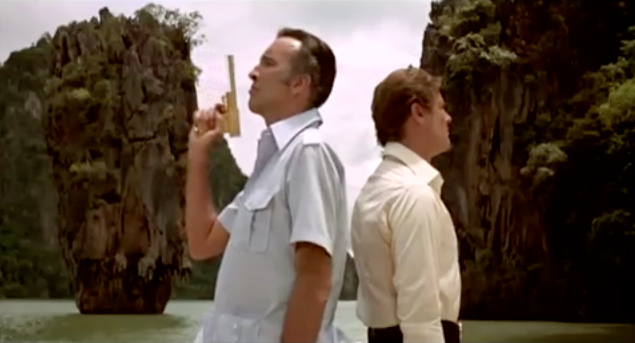
A scene with Homer’s kidnappers exchanging him for a case of money mirrors a scene in ‘Moonraker‘ (1979) as far as on screen interactions on cable cars going up Sugar Loaf mountain go! In that 007 film Bond confronted antagonist Jaws. The atmosphere shots of the Rio Carnival were filmed a year before the film itself was shot but the ‘Brazilian’ training camp was actually filmed in at a monastery at San Nicolo on Lido in Venice, Italy! The ‘Amazon’ boat chase actually started in Florida but culminated at Iguacu Falls on the border of Brazil, Argentina and Paraguay. 

Screen Shot 2014-06-25 at 21.41.06  Screen Shot 2014-06-25 at 21.41.39  Screen Shot 2014-06-25 at 21.34.31  Screen Shot 2014-06-25 at 21.33.23

‘The Bend In The River’ was a 1984 double-episode of ‘The A-Team‘ (S03E03) on NBC which features more Amazon action as the team supports journalist and ally Tawnia Baker find an archaeologist (secretly her fiancé) that’s gone missing during an expedition on the river. The guys deal with local pirates and come across a plot that is far greater than any of them could’ve expected. In the end Baker weds her fiancé in what happened to be her final episode as the production team finally dispensed with the idea of needing a female character. I don’t know for sure where this was filmed but likelihood is that it wasn’t too far from the Universal Studios backlot in Los Angeles where almost every single one of its 98 episodes were shot!

Screen Shot 2014-06-26 at 15.10.06  Screen Shot 2014-06-26 at 15.17.54

One production that actually did take place in the Amazon was ‘Anaconda‘ (1997) which was principally shot in the jungle around Manaus although as the giant snake picks off members of a jungle expedition the lush foliage seems to give way to the palm trees of California.

images  screenshot-med-05

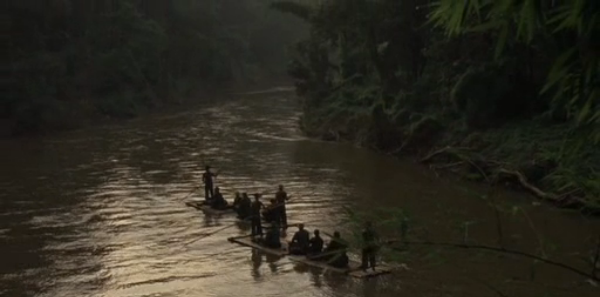
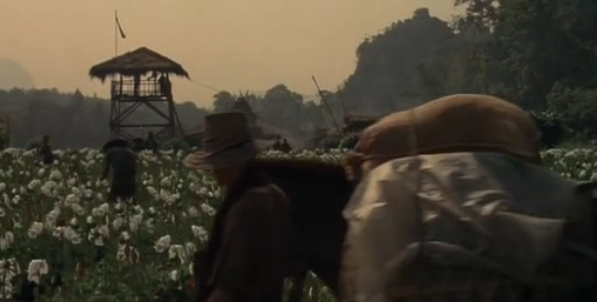
Based on a true story, ‘The Emerald Forest‘ (1985) was set and mostly filmed in Brazil with Belém, Tucuruí and Carajás in Pará state in the north used alongside the far less glamorous Lincolnshire (UK)!

ef13  ef1

Returning to TV shows and witty, sarcastic and profanity-using American chef/TV personality Anthony Bourdain is no stranger to Brazil. Just ahead of the World Cup ‘Parts Unknown‘ (S03E08) on CNN saw him visit Bahia a.k.a. the African heart of Brazil. It’s famed for its Afro-Brazilian music, art, design and food. On his previous shows ‘A Cook’s Tour‘ (S02E04), ‘No Reservations‘ (S03E15 & S09E07) and ‘The Layover‘ (S02E04) he visited Sao Paulo and Rio a couple of times each.

He once considered the former to be an ugly city but has changed his mind over time thanks to his ‘Paolista’  friends who showed him that the city is a vibrant mix of rich, poor, young and old. Rio is described as the perfect city that is almost impossible to not love. Tony just wishes he could enjoy the Brazilian paradise more but is nervous about his wife’s upcoming Jiu Jitsu fight in the country which gave birth to this martial art.

Screen Shot 2014-06-25 at 22.50.01  Screen Shot 2014-06-25 at 21.20.34

As for UK TV, Karl Pilkington was sent by comics Ricky Gervais and Stephen Merchant to see the seven wonders of the world in ‘An Idiot Abroad‘ (S01E06) which included the Christ Redeemer statue in Rio de Janeiro. Of course things were never gonna be that simple as he also has to take part in the Carnival parade (too noisy, crowded, and stressful), go to a nudist beach, go to a gay beach, stay at a hostel, stay with a female impersonator and then he finally gets to see fulfil his main goal of the trip; to see the statue which he just describes as being like a big ornament!

Screen Shot 2014-06-25 at 20.25.14  Screen Shot 2014-06-25 at 20.26.14

More British comedy next and it’s ‘Mike Bassett: England Manager‘ (2001) which sees a second tier football league manager gain the big job after its previous occupant had a heart attack. He’s inept but flukily manages to get England into the World Cup which is in Brazil. (You can see it here.) We see a montage of clichéd Brazilian images and then its scenes at the Airport, the team hotel, on the team bus, training ground, changing room, press conference and on the sidelines. It won’t surprise you to know that none of the actors went anywhere near Brazil during filming as it was all done in the UK.

Screen Shot 2014-06-25 at 17.52.14  Screen Shot 2014-06-25 at 17.54.20

2011’s ‘Fast Five‘ (a.k.a. ‘Fast & Furious 5‘) was a bit of a guilty pleasure for me and following on from four fairly average films in the series it really made people look up and take notice of the franchise. Thanks to aerial shots and quick editing many viewers were deceived into thinking it was the real Rio but it was actually filmed in Puerto Rico as their government offered some very beneficial tax incentives to influence the decision to film there. Similar to ‘The Simpsons‘ episode, the locals were unimpressed with the Rio stereotypes that included heavily armed drug traffickers, corrupt police, laughable accents and sexy women.

Screen Shot 2014-06-25 at 21.55.49  Screen Shot 2014-06-25 at 21.59.36

Before that, one of the last movies to be set in Brazil (kind of!) was the long awaited fourth Indiana Jones movie. ‘Indiana Jones & The Kingdom Of The Crystal Skull‘ (2008) was filmed 19 years after the last of the original trilogy and though often maligned I thought it was ok although the waterfall stunts did require an extension of belief. Another faked Amazon jungle for this one, with lush rainforests on private land on the Big Island of Hawaii filling in. A second unit was sent to film shots of Iguazu Falls which were then digitally combined with shots at the Universal backlot.

Screen Shot 2014-06-26 at 11.24.03  Screen Shot 2014-06-26 at 11.24.45  Screen Shot 2014-06-26 at 11.25.21  Screen Shot 2014-06-26 at 11.25.43  Screen Shot 2014-06-26 at 11.26.55  Screen Shot 2014-06-26 at 11.27.30

There’s something very exotic about seeing films or television shows set in Brazil and yes I did say exotic but maybe one letter can be changed in that word to tell us what kind of film ‘Emmanuelle In Rio‘ (2003) is!! Other movies to feature the huge South American country include ‘Fitzcarraldo‘ (1982), ‘Bossa Nova‘ (2000) and ‘The Incredible Hulk‘ (2008).

Screen Shot 2016-07-17 at 22.27.13  Screen Shot 2016-07-17 at 22.29.41

You can see previous On Screen articles by clicking on the links below:

On Screen #1 – Vietnam (Click here)

On Screen #2 – Istanbul (Click here)

On Screen #3 – Myanmar (Burma) (Click here)

Posted in Films, James Bond, Movie Locations, TV Shows | Tagged , , , , , , | 7 Comments

TF Recipes #4 – Wasabi On Toast

Following on from such legendary Tokyo Fox dishes as Natto on toast, Sashimi on toast and Miso on toast it’s time to up the ante a bit and so, in association with the mysterious Neil’s Meals blog, we bring you wasabi-on-toast….as well as a few other bonus wasabi-on-toast creations!e.

Thinking it might be too much for one person to handle, I invited Neil (a.k.a. Batman from last Halloween’s events) over to the Tokyo Fox Global Operations Centre to share the pain not that it was quite on the scale of things done in shows like ‘Jackass‘ or ‘Dirty Sanchez‘!!

Unlike Jean Reno in the 2001 movie ‘Wasabi‘ it really is not possible to just eat the root of this green-coloured Japanese plant without your eyes watering and your nasal passages burning. A daily dose of 5g of this notoriously spicy condiment supposedly provides anti-ageing effects. However, throughout this session we polished off the whole 43g tube between us! Of course grated wasabi would be more veritable but that’s way more expensive so we settled for the cheapest ingredients we could find!

With a backing track featuring our mutual friend’s band ‘The Mootekkis‘ we got down to work and here are the four basic steps to follow to make this authentic (?) Japanese dish……

Step One: Assemble your ingredients and put one or two slices of bread into the toaster for 2-3 mins.

IMG_4695  IMG_4696

Step Two: Use a knife to spread butter on the toast (if desired) followed by a light spreading of wasabi. Be aware that just the slightest blob of it offers quite a kick if eaten all at once. Phallic shaped designs are optional!!

IMG_4698  IMG_4699

Step Three: Put the wasabi-on-toast back into the toaster for 1-2 minutes extra.

IMG_4700  IMG_4701

Step Four: Put the wasabi-on-toast in your mouth, eat it and wait for the inevitable punch to hit you!

IMG_4703  IMG_4716

Bonus: That was just the starting point as we began to let our combined creative juices flow as melted cheese and wasabi on toast followed next and the two actually seem to compliment each other quite well….though you may not think that by the look on my face at times!!

IMG_4735  IMG_4739  IMG_4760  IMG_4765

After that, it was chocolate and wasabi on toast which brought about an end to my 33 day abstinence from chocolate (bread too actually!) but you’ve gotta live your life a bit and put personal stuff like that to the side in aid of such culinary experiments! The wasabi could barely be tasted due to the excessive amount of melted chocolate covering it!

IMG_4776  IMG_4781  IMG_4787  IMG_4791

As we’d bought an 8 slice packet of bread we decided we may as well finish it off and probably took things a bit too far with a baked Kit-Kat and wasabi on toast with Neil being a real man and suffering for the arts as he ate the creation without spreading the wasabi around as is the sensible option!

IMG_4800  IMG_4801

But what did they all taste like I hear you ask. Only one way to find out!!

You can see previous ‘……on toast’ creations by clicking on the links below:

TF Recipes #1 – Miso on toast (Click here)

TF Recipes #2 – Sashimi on toast (Click here)

TF Recipes #3 – Natto on toast (Click here)

Posted in Food & Drink | Tagged , , , , , , , | 6 Comments

Tokyo Daytripper: Top 10 Chiba Sights

It’s quite easy to knock Chiba but I will always have a strong affection for the place as its where my Japan adventure began all those years ago in a small apartment in Matsudo-shi. As transport links to Tokyo are good, the northern end of Chiba in particular is basically just an extension of the capital cities grey looking residential area whilst the southern end is a bit more countryside.

Here then, in no particular order, are the Tokyo Fox top ten things to do in Chiba featuring a mix of famous sights and some hidden gems too.

1. Nokogiri-yama – This place featured in a ‘Top Gear‘ special and offers a great break from the concrete jungle with its fine mountain views of the surrounding green hills as well as Japan’s largest Buddha statue belowMore details here.

Nokogiriyama 046

2. Onjuku beach – Beautiful 2km long white sandy beach (below) amid Continue reading

Posted in Tokyo Daytripper: | Tagged , , , , , , , , | 40 Comments

Tokyo Daytripper: Riding One Of Tokyo’s Last Surviving Tram Lines Pt II

If you thought it was all a bit kid-orientated in part one of this trip then fear not as the Tokyo Fox journey along the Toden Arakawa line continues on to the other end of the spectrum. Shin-Koshinzuka is a 15 minute walk from Sugamo station on the Yamanote line and is full of old fashioned shops along Sugamojizo-Dori Avenue aimed at the older generation.

P1040925  P1040926  P1040931  P1040932

The street is lined with some very traditional restaurants and food shops as well as clothing stores and so on. Faito Gyoza has been around for many decades and was a very popular place selling a different style of gyoza to what is usually served up elsewhere in the city. Stopping here was a most welcome addition to a journey that was starting to tire us out a bit.

IMG_4599  IMG_4595  IMG_4597  P1040933  P1040934  P1040935

About halfway down the shopping street is Koganji Temple; home to the Togenuki Jizo statue, which is often incredibly popular with queues of people waiting to wash the statue in hope of relief of their ailments. They use small hand towels which they then place on their own body in hope of relief.

P1040936  P1040937

For my girlfriend it was a trip back down memory lane as she used to live just off the street and it was certainly interesting for her to see how the area had changed and more importantly how it had not!

IMG_4600  P1040941  P1040939  P1040942

Back on the Arakawa line and Otsuka-Ekimae was the next destination for another opportunity to see the streetcars blend in with the Yamanote line going above-head. Otsuka is often a welcome respite from the never-ending activity that Tokyo is so well known for yet this time it feels like it’s the biggest stop along a line which tends to crawl through so many quiet residential area’s.

P1040967  P1040969  P1040970  P1040971  P1040973  P1040974

Kishibojinmae is an area that I am quite familiar with having lived there in the past and that was the next stop. I used to live right next to Kishimojin temple which was the first stop. Since the Edo-period it has been a place of worship for the health and prosperity of children thanks to the supposed power of one of its gingko trees.

P1040944  P1040947  P1040948  P1040953

One stop back is Toden-Zoshigaya which meant a bit of a retreat was in order. Zoshigaya Cemetery and the Zoshigaya Missionary Museum are both nearby although the latter is a bit more difficult to locate on the quite backstreets of the area.

P1040957  P1040960  P1040964  P1040993

From there on its onwards to the final port of call both on foot and via the streetcar itself.  By this stage I feel no shame in whipping my camera out to snap away at the trams like a true trainspotter!

P1040975  P1040976  P1040977  P1040979

Waseda brings about the end to the line and a brief trip to the University is taken. Whilst most British students do nothing more than throw on some jeans and an old t-shirt (as its not really allowed for one to go in their pyjamas!) it’s a different story over here where, for the girls especially, appearances are everything and everyday is a catwalk! God knows how long some of them spend in front of the mirror each morning before heading off to classes each day!

P1040980  P1040982  P1040986  P1040989

Posted in Japan Life, Japan Travel, Tokyo Daytripper: | Tagged , , , , , , , , , , | 2 Comments

Tokyo Daytripper: Riding One Of Tokyo’s Last Surviving Tram Lines Pt I

Recent trips around Japan to the likes of Hiroshima in March and Nagasaki in April have given me the opportunity to ride around on their excellent trams and I guess I must have been feeling nostalgic for these street cars last month when I dragged my girlfriend along for a day riding one of only two tram lines in Tokyo!

There are 30 stations dotted along the Toden Arakawa Line which runs for a total distance of 7.6 miles (56 minutes) between Waseda and Minowabashi. For the record, the other one is the privately owned Tōkyū Setagaya Line in western Tokyo. The Arakawa line’s been in operation since 1974 and is the last survivor of the once dominant Toden street car system (about 20 lines at one time) but for how much longer will this one continue? Difficult to tell really as its certainly not losing passengers based on what we saw on this day trip. I guess it survives because of nostalgia, public pressure and the limited effect it has on some of Tokyo’s ordinary streets.

In the appendix of the latest John Rain thriller ‘Graveyard Of Memories, which is set in 1970’s Tokyo, author Barry Eisler recommended an excellent photo blog about the line called Lifetoreset and I’m very glad that I had a look at it before setting out on this densha journey.

The tiny end station of Minowabashi in the north east of Tokyo has quite a Showa-era feel to it and is quite hidden away from the roads and is famed for the colour and fragrance of its roses which run parallel to the platform.

P1050055  P1050059

From there on the street car chugs along on a small railway which dissects some quiet, residential neighbourhoods that were pretty much all new to me. It was quite strange to travel through so many parts which were unknown to me and I really did feel like I was in a different city at times. 

The best option for getting the most out of the line is the 400 yen day pass. If you just want to do a couple of journeys then the single ticket is better value at 170 yen whether you go one stop or ten stops! Ten stops away from Minowabashi is Odai which was our first true stop in terms of walking around the area a bit and when I say “a bit” I mean a bit as all we really did was cross the road for a brief look at the shrine before boarding the next tram!

P1040856  P1040855

Arakawa Yuenchi-mae is the next stop down and a little more interesting. It is home to the Arakawa Amusement Park which is a small but treasured park built in 1950 and a good place to take the little ones for a fun and cheap (200 yen entry) day out in an area which is not so crowded.

P1040860  P1040869

Before you reach the park and the old streetcar on display outside it, you will pass a small pool area where kids can navigate their way over the water in tiny water cars using arm power! I’ve no idea what you call these things!

P1040871  P1040872  P1040874  P1040876  P1040879  P1040880

Back along the road that returns us to the station is a shop specialising in American goods and a bit further on past a couple of restaurants is a temple which caught my attention due to the swastika sign above it. No, its not a place to worship the Nazi Party of Germany but in Japan the controversial symbol actually denotes a Buddhist temple. The sign can be seen on street maps around Tokyo to denote such a thing.

P1040883  P1040887

Oji-Ekimae was our next port of call and an area where the tram line mixes with cars, buses, and trucks on the road going under the proper JR railway line.

P1040888  P1040889

We crossed the road and found a small park amid some much needed shade with a very narrow stream ideal for soaking your feet in on a hot Summer’s day.

P1040896  P1040897  P1040901  P1040902

Oji Inari Shinto shrine is a brief de-tour up some steps from the stream and is probably not worth the climb for many!

P1040899  P1040900

Just round the corner on top of a hill is Asukayama park which we reached via a small cable car (free) that elevates all up from the main street.

P1040903  P1040907

This is a very family-friendly and spacious green park full of young kids playing around in the playground which possesses an old, parked train carriage and engine along with a play area and an important stone monument which was erected a long, long time ago to commemorate the opening of the park.

P1040906  P1040909  P1040910  P1040911  P1040912  P1040913  P1040916  P1040918

After exiting the park we continued on to the next destination of our journey……

P1040922  P1040923

Next: Riding One Of Tokyo’s Last Surviving Tram Lines continues in Part II

Posted in Tokyo Daytripper: | Tagged , , , , , , , , | 10 Comments

TF Top 10……’Alternative’ Museums In Tokyo

There have been many times in the past that I have visited museums when in new cities just because of a sense of obligation to do so due to what the guide books say. Japanese people tend to sleep in museums (if I can pigeon-hole a whole race into one heavy generalisation!) which is not something many other nationalities are comfortable with….or even allowed to do. I too often feel tired as soon as I enter museums and as much as I’d like to absorb all the information board material, very little ever seems to remain in my brain which is a shame but it’s also maybe a sign that these places are not for me. While I may not get too much out of visits to the art, science or history museums other than a feeling of tiredness and a slightly lighter wallet for, unlike most British museums, the ones in Japan are not free.

Having said that, there are still a fair few ‘alternative’ museums in and around Tokyo and here, in no particular order, is the Tokyo Fox top 10 recommendations. It should be noted that the Japanese use of the word ‘museum’ can be quite loose at times!!

1. Meguro Parasitological Museum, Meguro – Quite possibly the only museum in the world devoted to human and animal parasites. Not one for the fainthearted but supposedly a popular “date” destination for young couples. Maybe the guy shows his partner the 7.9m long tapeworm and then gets to comfort the shrieking girl!

2. National Football Museum, Ochanomizu – A hidden gem, this museum devotes most of its space to the 2002 World Cup Finals which it co-hosted alongside neighbours South Korea. The museum caters predominantly to the Japanese displaying the history of football in the country and features a reproduction of the national teams changing rooms in 2002 as well as other memorabilia, photos and shirts. The highlight is the ‘Mega Vision’ TV which is like being at the game as you have a panoramic view across the the giant screen enabling you to see the whole pitch from one camera angle. More details here.

10November2006 018

3. Tobacco & Salt Museum, Shibuya – It may sound dull, particular to a non-smoker and small consumer of salt products, but this is one of those quirky little museums that is perhaps deserving of just being able to say you’ve been there! The collection of cigarette packets from around the world is actually quite interesting as are some of the traditional ukiyo-e picture cards. More details here.

IMG_1863

4. Tokyo Olympic Museum, Shinjuku-ku – More commonly known as the Prince Chichibu Sports Memorial Museum this is located within the Chichibunomiya Rugby Stadium with exhibits including the winner’s podium from the 1964 Tokyo Olympics, torches, athletic uniforms, tickets, mascots, scale models and posters providing an impressive overview of the history of the Olympic Games. It also covers other sports such as rugby and football with some of the World Club Championship memorabilia on view. More details here.

Tokyo Olympic Museum

5. Ghibli Museum, Mitaka – Hugely popular place where tickets need to be bought in advance. The museum colourfully exhibits the process of making animations and there is an interesting 20 minute anime film to watch on your arrival. As well as the Miyazaki animated stuff, there are some exhibits relating to ‘Wallace and Gromit’ and ‘Morph’ of 1980’s Childrens BBC ‘Hartbeat’ fame! More details here.

Ghibli 021

6. Nihon Minkaen, Tama-ku – A rare opportunity to walk through and experience ancient Edo period style architecture first hand. These valuable historic creations have been relocated from all over Japan and feature a variety of buildings such as farmhouses, a water mill, a kabuki stage, a ferryman’s hut and an exhibition hall featuring your more common museum-type stuff displays. More details here.

P1010221

7. NHK Musuem of Broadcasting, Shibuya – Public broadcaster NHK runs tours of the sets used for their TV programmes. The majority of it is in Japanese but there is the chance to be a newsreader with an English auto cue so you too can speak in a dull, uninterested voice whilst reading some fake headlines! More details here.

6Nov2009 012

8. Omiya Bonsai Museum, Omiya – The perfect place for you to indulge yourself in the passion of Mr Miyagi of ‘Karate Kid‘ fame! This place has been open since 2010 and has displays of bonsai pots, suiseki (beautifully shaped) stones, pictures, historical bonsai materials and of course the bonsai trees themselves. This is just one of quite a few bonsai places in the area making up what is known as Omiya Bonsai Village. More details here.

IMG_0643

9. Shin Yokohama Ramen Museum, Shin Yokohama – “There’s a ramen museum in Yokohama?! You’re kidding me!” are Abby’s (the late Brittany Murphy) words in ‘The Ramen Girl‘ (2008) when asked if she’s been there. There really is one and it’s got a Showa 33 (1958?) re-production inside the place which claims to be the first food amusement park to be created anywhere in the world. More details here.

P1000588

10. Star Case, Koenji – Technically this isn’t a Star Wars museum but it goes pretty close to being one with (far more than this one!) with this fairly small shop being stuffed full of the thousands and thousands of LucasFilm merchandise goods that have been made over the years. And of course they can all be purchased! More details here.

Star Wars Shop In Tokyo!

* Honorary mentions go to Tokyo Subway Museum, Tokyo Fire Museum, Yebisu Beer Museum, JCII Camera Museum, Museum of Tin Toys, Kite Museum, Japanese Baseball Hall of Fame and Museum, Tsukuda Toy Museum, Tobu Museum of Transport & Culture, Tepco Electric Energy Museum, Sumo Museum.

Posted in Japan Life, Tokyo Daytripper: | Tagged , , , , , , , , | 5 Comments

TF Top 10……Music Videos Filmed In Japan

One of the most popular articles on Tokyo Fox over the years has been a feature called ‘Turning Japanese – Songs About Japan’ which was written in 2008 (and constantly updated since!) about international artists often feeling the need to put pen to paper and write some lyrics about their Japanese experiences. Many of these have often just been album tracks or b-sides but some have been released as singles but it seems that very few of them made their promotional videos in Japan. However, other artists have filled that void by shooting their videos in the land of the rising sun despite their songs not having anything too Japanese in their names or lyrics.

Here, in no particular order, is the Tokyo Fox top 10 (well 12 to be exact!) music videos filmed in Japan and sadly there’s no space for Avril Lavigne’s recent (s)hit ‘Hello Kitty‘!!

1. Manic Street Preachers – Motorcycle Emptiness (1992): One can only assume that the line “under neon loneliness” refers to the famous neon lights of Tokyo city and so it was felt that the video should also be set in and around Tokyo. The decision to film in Japan was a last minute one so without permits to film in the streets the band and an entirely Japanese crew (with the aid of an interpreter) directed the video guerrilla-style, whereby they had to stay one step ahead of the local police force as they filmed in Shibuya and Yokohama. Click here for more details on the exact locations. Watch it here.

Screen Shot 2012-07-01 at 21.48.12  

2. Beastie Boys – Intergalactic (1998): I remember this one for the bright Japanese construction worker koji (uniforms) which the band wore in Shinjuku and Shibuya stations. It is a parody of Japanese kaiju (monster) films and revolves around a giant robot causing destruction by fighting a giant octopus-headed creature in a Tokyo. It was made in late June 1998 and won an MTV Video Music Award for Best Hip-Hop video. Watch it here.

Screen Shot 2014-06-08 at 13.13.06  Screen Shot 2014-06-08 at 13.13.53

3. The Killers – Read My Mind (2007): Japanese TV character Gachapin; a green, bucktoothed dinosaur, featured in the video interacting with the band as they went around the streets of Shinjuku and Asakusabashi where, at the latter, they rode some unusual bicycles. Click here for more details on the exact locations. Watch it here.

Screen Shot 2012-07-02 at 12.25.57  Screen Shot 2012-07-02 at 12.24.37

4. Muse – Panic Station (2013): The original video irked many YouTube users as it featured the rising sun flag in the intro which was originally used as the war flag of the Imperial Japanese Army until the end of WW II and is considered offensive by some who associate it with Japanese militarism. However, after an apology from the band it was later replaced with the Japanese flag. Whilst in Tokyo in January 2013 during their ’2nd Law’ tour they filmed on the streets of Shibuya and at Robot Restaurant in Shinjuku’s Kabukicho district. Click here for more details on the exact locations. Watch it here.

Screen Shot 2013-05-26 at 11.35.54  Screen Shot 2013-05-26 at 11.38.29

5. Madonna – Jump (2006): Shot in Tokyo during her Confessions Tour stopover this 4th single from the ‘Confessions On A Dance Floor‘ (2005) album see Madonna in a platinum blonde bob wig and a black leather garment singing the song in front of a number of neon signs. The video also featured dancers who performed the physical discipline parkour. It really is difficult to make out where the parkour scenes were shot but it seems like some of the video at least was filmed in Shinjuku. Watch it here.

Screen Shot 2014-06-08 at 20.34.34  Screen Shot 2014-06-08 at 20.35.11

6. The Police – So Lonely (1980): Originally released in 1978 this wasn’t a hit until it was re-released and Sting and co must have been some of the first international artists to film their video in Tokyo. Street scenes from Hong Kong also featured and they were all edited together. Mita station on the Toei Mita and Asakusa lines was used as the band were seen walking up and down the train as well as on the platform. Watch it here.

Screen Shot 2014-06-08 at 12.38.25  Screen Shot 2014-06-08 at 12.38.38

7. DJ Fresh – The Feeling (2012): The music video theme seems to be all about youth and fulfilment and the feeling of ecstasy whilst these young people ride around the streets of Shinjuku, Harajuku and Ueno on relatively futuristic mopeds. Click here for more details on the locations. Watch it here.

Screen Shot 2012-10-31 at 22.03.03  Screen Shot 2012-11-02 at 22.14.30

8. Kaiser Chiefs – Man On Mars (2011): The video consists mostly of the Kaisers trip to Japan including footage of fans singing karaoke and some brief clips of their performance at the Fuji Rock Festival in 2011. This is all inter-dispersed with footage following Atsushi Takata, a Japanese fan of the band, around Tokyo and then on his way to and from the festival via bus. Click here for mored details on the exact locations. Watch it here.

Screen Shot 2013-01-30 at 23.10.54  Screen Shot 2012-08-09 at 11.48.13

9. Black Eyed Peas – Just Can’t Get Enough (2011): Filmed just a week before the 2011 Tohoku earthquake on March 11th this video was shot guerrilla-style as seems to be the norm when it comes to filming in the capital city due to the strict restrictions and regulations. Maybe this is why we so often see Tokyo portrayed on screen from hotel room windows and in the back of cars like Fergie and will.i.am respectively. Taboo sings his verse while walking Shibuya. It also includes the city’s rail network and nightlife. Watch it here.

Screen Shot 2014-06-08 at 19.59.32  Screen Shot 2014-06-08 at 19.55.07

10. Elastica – Car Song (1995): Shinjuku features yet again as this popular mid-90’s English indie band made a video which is supposedly a futuristic thriller combining elements of ‘Blade Runner‘ and Japanese monster films. The song is about having sex in a car and sees the band driving around the neon-lit streets of Tokyo whilst also doing some crazy plastic gun play in the narrow alleys of Golden Gai. Some scenes were also shot in the concourse of Shinjuku-sanchome station. Watch it here.

Screen Shot 2014-06-08 at 13.06.09  Screen Shot 2014-06-08 at 13.07.03

Bonus: Shampoo – Delicious (1994): Popular in the mid-90’s for a couple of big hits, this British female duo were the band that actually brought the term ‘big in Japan’ to my ears for the first time. This was filmed on the streets of Shibuya, particularly Center-Gai street, and also in the back of a limo being driven around neon-lit Tokyo. Watch it here.

Screen Shot 2014-06-08 at 13.29.56  Screen Shot 2014-06-08 at 13.30.58

Japan Bonus Track: Clean Bandit Ft Jess Glynne – Rather Be (2014): Sod’s law that as soon as I posted this entry on the net someone told me of this rather good tune which became number one in the UK. The video features Japanese actress Haruka Abe appearing as a fan of the band going about her daily life as a chef whilst having  hallucinations of band members appearing unexpectedly throughout. The video was made by the electronic group themselves in just under a week including guerrilla-style dancing in the train with the extras. Locations used include Tsukiji fish market, a yakitori bar and Shinjuku station. Watch it here.

Screen Shot 2014-06-13 at 16.05.26  Screen Shot 2014-06-13 at 16.06.20

Honorary Mentions: (courtesy of the comments section below! Thanks very much to all those who have informed me of these videos. Much appreciated) 

Phil Collins – Take Me Home (1986). Watch it here

Europe – Let The Good Times Rock (1989). Watch it here

N-Trance Ft Rod Stewart – Da Ya Think I’m Sexy? (1997). Watch it here

El Presidente – Turn This Thing Around (2006). Watch it here

Oasis – Acquiesce (2006). Watch it here

Katy Perry – Simple (2007). Watch it here

Kanye West – Stronger (2009). Watch it here

Lazee Ft Neverstore – Hold On (2009). Watch it here

Backstreet Boys – Bigger (2009). Watch it here

Tiesto and Sneaky Sound System – I Will Be Here (2009). Watch it here

Calvin Harris Ft Ne-Yo – Let’s Go (2012). Watch it here

Sub Focus Ft Kele – Turn It Around (2013). Watch it here

Will.i.am Ft Justin Bieber – #thatPOWER (2013). Watch it here

R5 – (I Can’t) Forget About You (2014). Watch it here

Carly Rae Jepsen – Run Away With Me (2015). Watch it here

Honne & Izzy Bizu – Someone That Loves You (2016). Watch it here

Clean Bandit Ft Demi Lovato – Solo (Japan Edition). Watch it here

If you know any more music video’s filmed in Japan then please let me know in the comments and I’ll add them. Thanks.

Posted in Japan Filming Locations, Music | Tagged , , , , , , , | 54 Comments

World Cup Opening Titles: Japan/Korea 2002

Whenever there’s a World Cup on the horizon the media tend to look back at past tournaments and so, as a Japanese based website, this as a good opportunity to look back at the 2002 tournament which Japan co-hosted alongside neighbours South Korea. Tokyo Fox is going to take a deeper look at the opening titles for both the BBC and ITV coverage and dissect it with regard to what images of Japan were shown.

You can watch the BBC opening titles here and the ITV ones here.

This was a World Cup which I absorbed like no other as I had just returned from a long backpacking trip and so was free to consume each and every game live (despite the early morning kick offs in UK time) as well as the highlights shows and a lot of the BBC Radio 5 Live output too. I was very keen to see both the host countries play but particularly Japan as I had met many great Japanese guys during my year in Australia. I had also sounded out the possibility of moving to the country to work as a teacher either on the JET programme or for Nova. It would take another 15 months or so for me to finally get round to doing the latter though!

Now, I’m usually happy to see the World Cup games whichever side they’re being shown on though of course the BBC always wins out when the two go to head to head which they did for England’s 2nd round and quarter final games as well as the final of course. The fact that BBC presenter (and former Foxes striker!) Gary Lineker lived in Japan for a couple of years in the early 90’s when he was plying his trade with Nagoya Grampus Eight gave the beeb that extra insight into football and life in the Far East not that they really ever need such an advantage as being commercial-free is always gonna win the ratings war at the end of the day.

Screen Shot 2014-04-09 at 10.15.21  Screen Shot 2014-04-09 at 10.15.42

Faithless provided the theme tune to the BBC’s coverage as a sample of their 3rd single ‘Tarantula‘ from the 2001 album ‘Outrospective‘ played over the top as exotic images from Korea and Japan were shown in a typical fast-paced and cleverly edited style. Of course all the classic and clichéd Japanese things like sumo, geisha, Mount Fuji and the shinkansen (bullet train) all feature as well as koi (carp), the Great Buddha in KamakuraShibuya crossing and Itsukushima shrine at Miyajima in Hiroshima-ken.

Screen Shot 2014-04-09 at 10.16.35  Screen Shot 2014-04-09 at 10.16.51  Screen Shot 2014-04-09 at 10.17.34  Screen Shot 2014-04-09 at 10.18.35

Those iconic images were then blended in with some great clips of World Cup footballing past before culminating with the torii gate of Miyajima.

Screen Shot 2014-04-09 at 10.18.53  Screen Shot 2014-04-09 at 10.19.30

The BBC Team: Presenters: Gary Lineker, Ray Stubbs. Commentators: John Motson, Barry Davies, Steve Wilson, Tony Gubba, Rob Maclean, Ian Gwyn Hughes. Co-Commentators: Trevor Brooking, Mark Lawrenson, Trevor Steven, Efan Ekoku, Joe Royle, Mark Bright. Pundits: Alan Hansen, Martin O’Neill, Peter Schmeichel, Ian Wright, Jamie Redknapp, Peter Reid, David O’Leary.

Screen Shot 2014-04-09 at 10.20.07  Screen Shot 2014-04-09 at 10.20.24

Over on ITV, they yet again went down the opera route which both stations have done a lot ever since the huge success of Pavarotti and ‘Nessun Dorma‘ in Italia ’90. Their theme was ‘Madame Butterfly (One Fine Day)‘ as performed by the Opera Babes which has some reference to Nagasaki, Japan and Japanese culture though I’m not exactly sure what!

Screen Shot 2014-06-01 at 00.40.55  Screen Shot 2014-06-01 at 12.36.58

Their opening titles feature far more football clips than the beebs with great memories of past World Cup heroes shown in the blink of an eye such as Michael Owen, Zinedine Zidane, Bobby Moore, Gazza, Pele, Nobby Stiles, Michel Platini, Johan Cruyff, Diego Maradona, David Platt, Ray Houghton, Dunga, David Beckham, Gerd Muller and Marco Tardelli,

Screen Shot 2014-06-01 at 12.40.46  Screen Shot 2014-06-01 at 12.48.21

Whereas the BBC had places in Japan in their titles, ITV went for cultural images of quintessential Japanese iconography like kendo and geisha with them appearing amid a mix of players in action and all layered over cloth (Korean hanbok?) blowing about in the wind. Of course, most British people’s knowledge of Japan and Korea is fairly limited so the broadcasters can’t really be blamed for using simple images which the viewers can quickly recognise in the split second its shown on air.

Screen Shot 2014-06-01 at 12.48.40  Screen Shot 2014-06-01 at 12.48.58  Screen Shot 2014-06-01 at 12.55.16  Screen Shot 2014-06-01 at 12.55.54  Screen Shot 2014-06-01 at 12.56.25  Screen Shot 2014-06-01 at 12.56.41

The ITV Team: Presenters: Des Lynam, Bob Wilson, Matt Smith, Gabby Logan. Commentators: Clive Tyldesley, Peter Drury, Jon Champion, Guy Mowbray, Peter Brackley. Co-commentators: Ron Atkinson, Jim Beglin, David Pleat, Graham Taylor. Pundits: Terry Venables, Gary Neville, Paul Gascoigne, Ally McCoist, Robbie Earle, Andy Townsend, Bobby Robson, Clive Allen, John Barnes, Barry Venison.

The 2002 World Cup will be remembered by me for the shock results and the exuberance of the locals. Despite initial concerns by some that Asia lacked a passion for football the local support contrasted such criticism as they lent their support not just to their own team but also to the other nations involved. Although the tournament was considered a triumph for Japan it was neighbours South Korea who reigned supreme in Asia by reaching the semi-finals.

* If you’re in Japan and fancy rewinding back to 2002 then there are a couple of places which may be of interest. The Japan Football Museum is in Ochanomizu and has a wealth of memorabilia and information relating to that tournament in particular.

untitled  Yokohama World Cup Final Stadium Tour

The second is the Nissan Stadium (sometimes referred to as International Stadium Yokohama) in Yokohama which played host to the final between Brazil and Germany as well as three group games. It is possible to do a stadium tour featuring a reproduction of the Brazil team’s dressing room including replica shirts and signed lockers, a warm-up training room, player hand and footprints, the usual displays of photos, balls, shirts, flags and tickets and of course you get the chance to walk out of the tunnel and go pitch side.

Posted in Japan Travel, Sport, TV Shows | Tagged , , , , , , , | 12 Comments

On The Trail Of John Rain (雨) Part VI – Tokyo

The hugely successful re-boots of both the Batman and 007 film series’ back in the middle of the last decade showed that their was a great thirst for such things and so the John Rain series’ of books has followed that tradition as author Barry Eisler fills in a bit of Rain’s backstory and comprehensively explains the events which forged his character, outlook and destiny. The latest novel ‘Graveyard Of Memories‘ dropped on my mat very recently (well it was waiting in my mailbox but that’s not what people say is it?!) with the blurb promising an explosive prequel to the bestselling series.

The story goes back to the Tokyo of 1972 and tells readers how Rain made the transition from the jungles of Southeast Asia to the mean streets of Tokyo. Eisler decided to concentrate the action in the eastern part of the capital which has been transformed far less than in the more cosmopolitan west. This decision was taken to use mostly existing places which have been around since at least 1972 to allow readers to visit them if they wish. Of course that was welcome news for fans like me so here is the bicycle tour I did of the city in the order I did it rather than in the chronological order they appear in the book. Page numbers refer to the time when they are first mentioned in the paperback version of the novel. * Spoilers are included below, you have been warned!

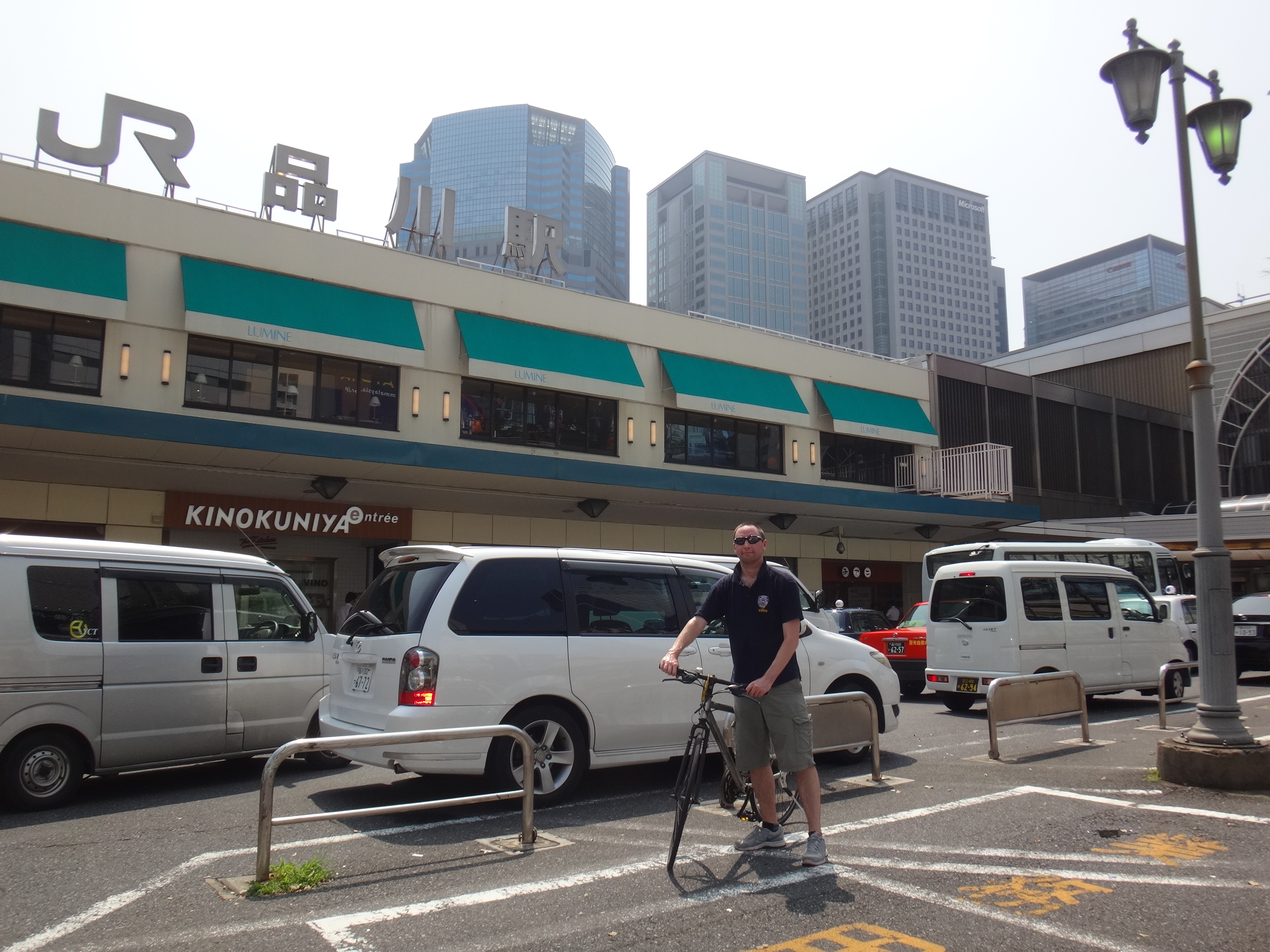
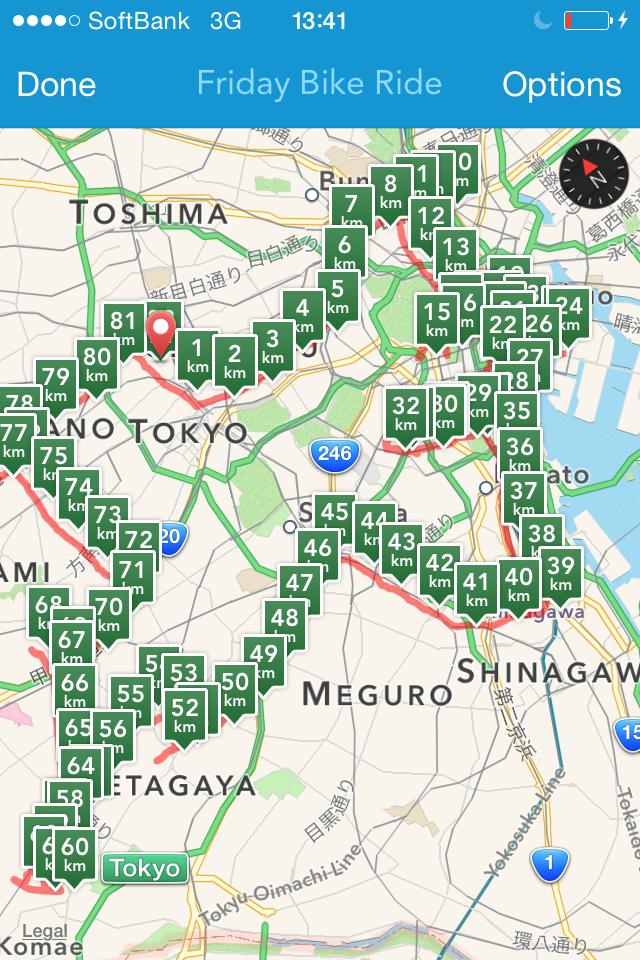
As I was awake I left the Tokyo Fox Global Operations Centre in Shinjuku-ku at 8am on the dot in the hope that I could get back early afternoon to rest and recover ahead of a busy weekend. Temperatures were already in the high 20’s at that time as two stations were clocked up within the first half hour; Akihabara (page 103) and Okachimachi (page 8) respectively. The former is where Rain goes to buy some items needed for his sento mission whilst the latter was nothing more than a place where he caught a train.

P1050015  P1050018

Ameyoko (page 4) is short for Ameya-Yokochou a.k.a. Candy Alley a.k.a. America Alley. This area of Ueno is where Rain goes early doors and buys a cup of watermelon juice and then gets jumped by three men.

P1050019  P1050020

It’s a very short distance to the next locale; Benten Shrine (page 285) which is in Ueno Park and is the place where Rain agrees to meet McGraw. Shinobazu Pond (287) is right next to it and its lotuses is where something pretty major happens at the end of the book which maybe I shouldn’t mention here despite my spoiler warning earlier!

P1050023  P1050026

Yushima Tenmangu shrine (page 252, 260) is more commonly known as Yushima tenjin and is renowned for its plum trees and is dedicated to the kami of learning. It’s a popular place for students to come and pray before exams and as if to hammer that point home to me the shrine was full of them by the time I had located it at 3-30-1 Yushima. Rain pays a couple of visits to this shrine; he prays here before his “final test” and later returns to read some information given to him by Tatsu.

P1050034  P1050028  P1050029  P1050030

I had been circling the Yushima area for a while beforehand trying to find Shinsuke but ultimately would leave empty handed where that particular place (an old-school izakaya) was concerned. I don’t think its fallen foul of the Eisler-curse which has resulted in many previous Rain locations closing down!

Unfortunately Hotel Apex, the Uguisudani love hotel where the tough Korean wheelchair-confined Sayaka works, doesn’t exist but there are many love hotels in that area catering for couples needing a couple of hours to get it on. It’s all a bit quiet and rather dull during the daytime but comes alive at night when the back alleys full of cheap love hotels do their main business!

P1050036  P1050038

The north entrance of JR Uguisudani station (page 128) is where Rain and Sayaka meet up on their date before he whisks her away (via van) to see some live jazz at a club in Kabukicho, the neon heart of Shinjuku.

P1050042  P1050044

Next up was the enormous Yanaka Cemetery (page 228) where Rain’s emerging tactical acumen comes to fruition as he takes down three yakuza and just down the road from the cemetery is Kabaya Coffee (page 194) at 6-1-29 Yanaka. This is a two-storey wooden structure standing on the corner where Rain collects a file taped to the underside of a counter seat. The place was busy so I didn’t take a break. The fact that I don’t actually drink coffee was another reason for continuing on with my mission!

P1050046  P1050047

Back in 1972, Nishi Nippori (page 26) 4-chome was where Rain lived with a view (of sorts) of the Yamanote train track below which was in the process of being expended to deal with the growing population.

P1050048  P1050050  P1050051  P1050063

Distances between locations had been very short up until now and whilst another 4 miles north-east to Kita Senju (page 79) might not seem too much it certainly felt like it as I lost my bearings en-route to the Sumida-gawa river which I had to cross. Once I was back on track I found the place and went off the main thoroughfare to discover a tangled tapestry of non-fancy unpretentious houses lining some very narrow, clustered streets. Not sure why I didn’t take any photos in this area but can hazard that tiredness played a part but maybe the main reason my camera stayed in my bag was that there wasn’t an actual address for LDP Executive Council chairman Kakuei Ozawa’s house.

I was then very fortunate to find the next location but thanks to a very kind local lady I found myself following her on bicycle as she led me to the correct address. It’s fair to say that such oba-san have felt the wrath of my rage on twitter before so maybe next time I’ll think back to this example of kindness before I sound off! I had obviously got my numbers mixed up when writing down the address or it is indeed wrong on many sites. The actual address is 32-6 Kotobuki-cho and the place is Daikoku-yu sento (page 81 & 117) where the bathtub fatality of a certain LDP person occurs. It’s open from 3pm to midnight (450 yen) which meant that I was sadly way too early to take a much needed soak!
P1050066  P1050071

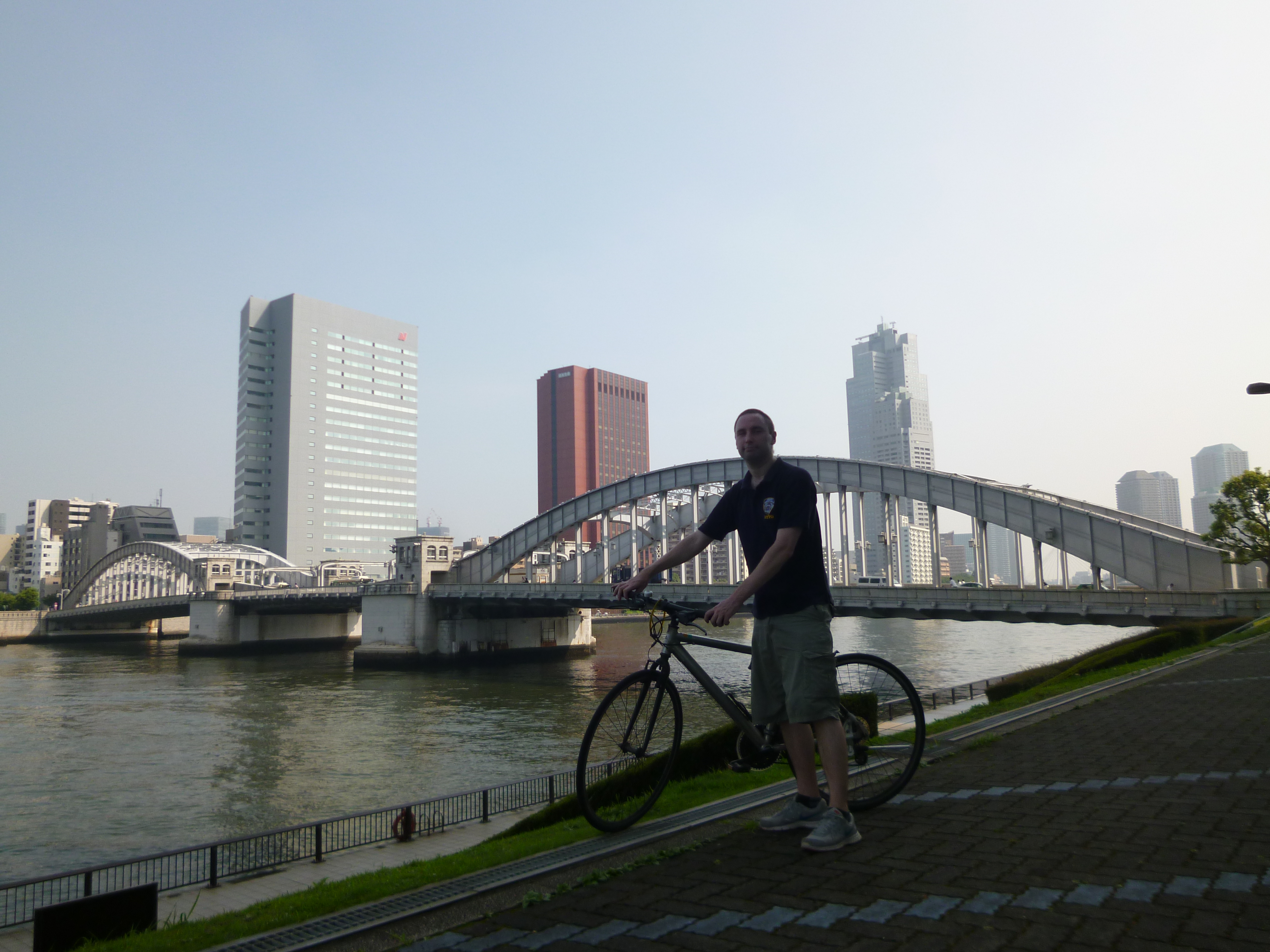
Following a meeting with McGraw, Rain ends up eventually at Sumida Park (page 195) alongside the river (and now opposite the 634 metre high Tokyo Sky Tree) where he sat down to read a file of some sort. It should be noted that parks in Tokyo are rarely ever the green grassy types many westerners expect but are just asphalt or sand surfaces amid some trees.
The final port of call on this day is Kamiya Bar (page 12) which is located on the corner of the two main roads which take thousands of people each day between the station and the highly popular Senso-ji Temple. Rain meets McGraw here at the start of the story. It’s address is quite easy to remember as its 1-1-1 Asakusa!
P1050073  P1050075

That may have been the last stop but it should be noted that whilst completing all the stops is one thing getting back home is another and my arse is very sore as I cycle on 6.5 miles more to get home just after 2.30pm where I am annoyed to discover that the Runkeeper app (which should track the whole days course) has inadvertently paused at some point. That point happened to be the furthest place which was Kita Senju so given that up until then I had done 35 km I can probably assume I did about 70km in total which aint a bad days work!

Next: ‘On The Trail Of John Rain (雨) Pt VII’ featuring the remaining Tokyo locations in Rain #8 a.k.a. ‘Graveyard Of Memories‘ (2014)

For other John Rain entries please click on the following:

Rain Fall Film  Rain Fall Film Review  Prelude  Part I  Part II  Part III  Part IV  Part V  Part VII

Posted in Books, Cycling | Tagged , , , , , , , , , | 12 Comments